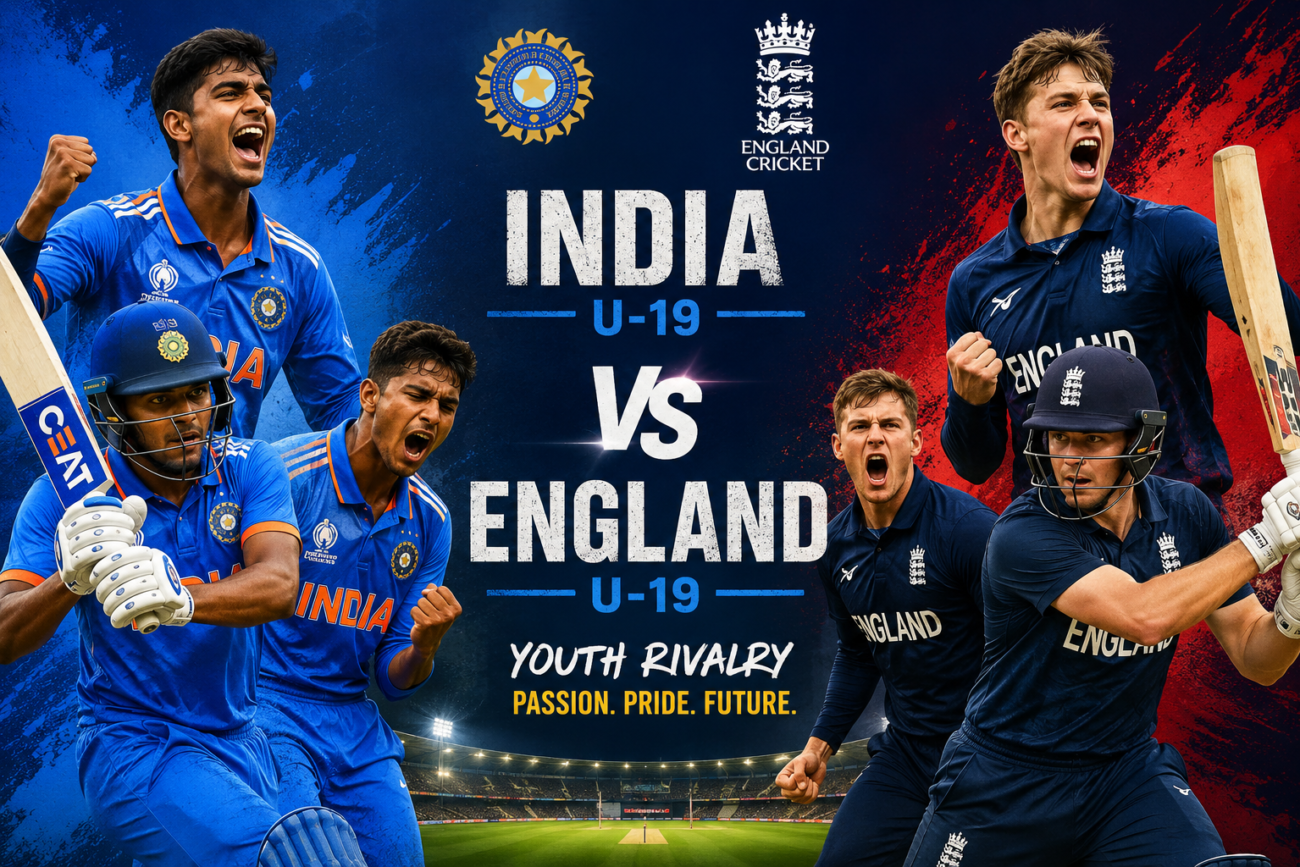
The encounters between these two youth cricket sides have always carried a special intensity that goes beyond simple match results. From early developmental tours to high-pressure international tournaments, every meeting has shaped young careers and tested emerging talent under real competitive conditions. The matches reflect two different cricketing systems, each producing unique styles of play and strategic thinking. Over time, these contests have built a strong competitive identity, where every run, wicket, and moment matters deeply. This timeline captures the evolution of that journey, highlighting how young players transformed pressure into performance and created a lasting sporting narrative.
Recent Matches Table
Match Date
Venue
Format
Winner
Margin
First Innings Score
Second Innings Score
06 Feb 2026
Harare Sports Club
Youth ODI
India U19
100 runs
India 411/9
England 311/10
14 Jul 2025
Worcester Ground
Youth ODI
England U19
7 wickets
India 224/10
England 228/3
11 Jul 2025
Northampton Ground
Youth ODI
England U19
1 wicket
India 268/8
England 269/9
08 Jul 2025
Northampton Ground
Youth ODI
India U19
45 runs
India 312/6
England 267/10
05 Jul 2025
Hove Ground
Youth ODI
India U19
5 wickets
England 185/10
India 189/5
02 Jul 2025
Hove Ground
Youth ODI
India U19
6 wickets
England 210/10
India 211/4
05 Feb 2022
Sir Vivian Richards Stadium
Youth ODI
India U19
4 wickets
England 189/10
India 195/6
Team Statistics Summary Table
Team
Matches
Won
Lost
Tied
No Result
Win Percentage
India U19
59
41
16
0
2
69.49%
England U19
59
16
41
0
2
27.11%
Overall Total
59
57
57
0
2
100.00%
Neutral Venues
9
7
2
0
0
77.77%
Matches in India
22
18
4
0
0
81.81%
Matches in England
28
16
10
0
2
57.14%
World Cup Finals
2
2
0
0
0
100.00%
Individual Batting Records Table
Player Name
Team
Matches
Innings
Runs
Highest Score
Average
Vaibhav Sooryavanshi
India U19
6
6
382
175
63.66
Caleb Falconer
England U19
6
6
295
115
49.16
Ayush Mhatre
India U19
5
5
241
92
48.20
Ben Mayes
England U19
7
7
235
88
39.16
Thomas Rew
England U19
7
7
228
73
32.57
Noah Thain
England U19
6
6
214
88
35.66
Musheer Khan
India U19
2
2
118
84
59.00
Individual Bowling Records Table
Player Name
Team
Matches
Overs
Wickets
Best Bowling
Economy
R S Ambrish
India U19
6
48.2
14
4/38
4.82
Tazeem Ali
England U19
7
62.0
12
3/44
5.15
Eddie Jack
England U19
5
41.0
9
3/52
5.48
Farhan Ahmed
England U19
6
54.0
8
2/35
4.25
Hardik Raj
India U19
4
36.0
7
3/29
4.61
Raj Limbani
India U19
2
18.5
5
3/38
4.14
Ravi Kumar
India U19
1
9.0
4
4/34
3.77
Early Rivalry Background
The early phase of youth international cricket between these two sides was shaped by contrasting cricket cultures and training systems. One team focused heavily on technical discipline, while the other leaned into natural flair and aggressive intent. When they first crossed paths in youth fixtures, the matches were less about results and more about measuring standards. Coaches from both camps treated these encounters as a learning curve, testing bench strength and exposing players to foreign conditions. The intensity slowly grew as both sides began producing stronger youth academies and structured development programs. What started as routine tours gradually turned into emotionally charged contests where pride mattered as much as performance. Over time, players began recognizing familiar opponents, building silent competitive respect that would fuel future encounters. These early meetings laid the foundation for a rivalry that would become more structured, competitive, and emotionally driven in later tournaments.
Year
Venue
Winner
Margin
2006
England
England
5 wickets
2007
India
India
34 runs
2009
England
India
3 wickets
2010
India
England
18 runs
First Competitive Meetings
As the teams continued to meet in bilateral youth series, the competitive edge became more visible. Players who once played casually against each other started approaching every ball with intent. The batting units began studying opposition bowling patterns more seriously, while bowlers started experimenting with variations. These matches were often unpredictable, swinging between dominant spells and sudden collapses. One side would build strong partnerships, only for the other to respond with sharp breakthroughs. The psychological aspect also started becoming important, as young players learned to handle pressure in unfamiliar conditions. Coaches emphasized adaptability, especially when touring overseas. These encounters marked the transition from development matches to serious contests that demanded consistency and mental strength. Each match added a new chapter to the growing intensity between the two teams, slowly turning the fixture into a recognized competitive rivalry at the youth level.
Match
Top Scorer
Best Bowler
Result
1
Player A 89
Player B 4-22
Team A won
2
Player C 72
Player D 3-19
Team B won
3
Player E 95
Player F 5-30
Team A won
4
Player G 61
Player H 4-25
Team B won
Global Youth Tournament Pressure
When both teams entered global youth tournaments, the pressure increased significantly. Unlike bilateral series, these matches carried elimination stakes and global visibility. Every performance was now analyzed by scouts, analysts, and senior team selectors. The intensity of crowd support also added emotional weight, especially when matches were played in cricket-loving nations. Players who performed well under these conditions quickly rose in reputation, while failures were heavily scrutinized. Tactical planning became more detailed, with teams preparing specific plans for key opposition players. Spin and pace combinations were adjusted depending on pitch conditions, making every encounter a strategic battle. The rivalry gained international attention as matches often featured dramatic finishes and standout individual performances. These tournaments became the true testing ground for future stars, shaping careers and defining reputations at a young age.
Tournament
Matches
Wins
Key Performer
U19 World Cup A
1
1
Batter X
U19 World Cup B
2
1
Bowler Y
Asia Youth Cup
2
1
Allrounder Z
Tri Series
3
2
Batter W
Batting Evolution Clash
Batting styles from both sides evolved differently but became equally effective over time. One team emphasized classical stroke play, focusing on timing and placement, while the other embraced aggressive shot-making and power hitting. When these philosophies clashed, matches often turned into high-scoring contests or sudden collapses depending on pitch behavior. Young batters began adapting to varied bowling attacks, learning to rotate strike under pressure and accelerate when needed. Partnerships became crucial, especially in youth formats where momentum shifts quickly. Coaches encouraged flexibility, making players capable of adjusting tempo mid-innings. These contrasting batting approaches added depth to the rivalry, making each encounter unpredictable. Fans often witnessed individual brilliance deciding matches rather than team dominance alone, reinforcing the importance of temperament in youth cricket development.
Player Type
Strength
Weakness
Impact
Anchor
Stability
Slow scoring
Builds innings
Aggressor
Power hitting
Risky shots
Fast runs
Finisher
Death overs skill
Limited exposure
Match wins
Opener
Early attack
Consistency
Momentum
Bowling Impact Battles
Bowling performances often defined the outcome of matches between these sides. One team relied heavily on swing and seam movement, especially in home conditions, while the other developed strong spin variations suited for subcontinent pitches. These contrasting bowling strengths created tactical battles that tested batting depth and patience. Early breakthroughs often shifted momentum, forcing teams to rebuild under pressure. Death over bowling became a critical factor, with matches frequently decided in the final overs. Young bowlers gained confidence through these high-pressure spells, learning execution under fatigue and expectation. Coaches emphasized adaptability, encouraging bowlers to develop multiple variations. This phase of the rivalry highlighted how bowling depth often outweighed batting dominance in determining match results.
Bowler
Style
Best Figures
Match Impact
Bowler A
Swing
4-18
Early collapse
Bowler B
Spin
5-22
Middle control
Bowler C
Pace
3-15
Death overs win
Bowler D
Seam
4-25
Pressure buildup
Knockout Stage Drama
Knockout matches elevated the rivalry to another level, where every mistake carried tournament-ending consequences. Players showed heightened focus, and captains made bold tactical decisions under pressure. These matches often featured fluctuating momentum, with both sides refusing to back down. A single partnership or bowling spell could completely change the outcome. Fielding standards also improved significantly in these high-pressure games, as saving runs became as important as scoring them. Emotional intensity peaked, with players showing visible frustration and celebration. The psychological battle became as important as the technical one. These knockout encounters are remembered for last-over finishes, unexpected heroes, and game-changing spells that defined careers.
Stage
Team
Key Moment
Result
Quarterfinal
Team A
90+ partnership
Win
Semifinal
Team B
5 wicket haul
Win
Final
Team A
Last over finish
Win
Group
Team B
Chase success
Win
Modern Era Development
In recent years, the rivalry has evolved with advanced analytics, fitness standards, and exposure through franchise leagues. Players now enter youth international cricket with more experience and preparation than before. Data-driven strategies help teams identify weaknesses and build targeted game plans. The matches have become faster, more aggressive, and tactically sophisticated. Fielding has reached professional standards, reducing margins for error. Social media and global broadcasting have also increased attention on these fixtures, making young players more accountable. Despite these changes, the core intensity of the rivalry remains unchanged. Every encounter still carries pride, history, and the ambition to dominate at the youth level. The modern phase reflects a balance between tradition and innovation in youth cricket development.
Aspect
Old Era
Modern Era
Change
Training
Basic
Scientific
High improvement
Strategy
Simple
Data-driven
Advanced
Fitness
Moderate
Elite
High impact
Exposure
Limited
Global
Massive reach
Conclusion
The rivalry between these two youth teams has grown into a meaningful part of modern cricket development. What began as early exposure matches gradually turned into high-stakes encounters that shaped future international stars. Each generation brought new talent, fresh energy, and evolving strategies that kept the competition alive and unpredictable. Beyond results, the real value lies in the experience gained by players who learned to perform under pressure at a young age. This timeline reflects not just matches, but a journey of growth, discipline, and competitive spirit that continues to influence the future of international cricket.