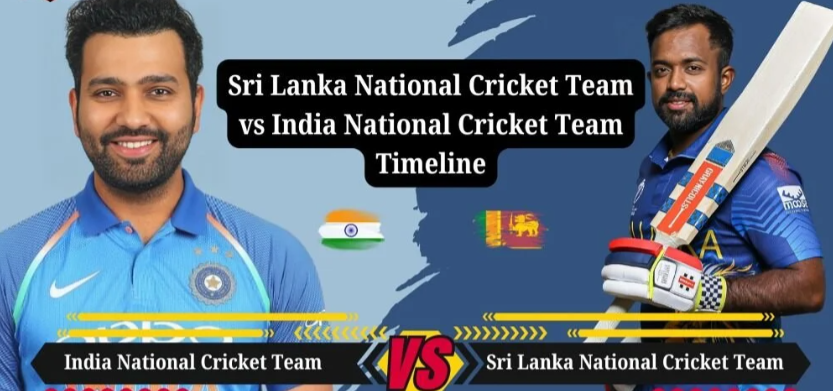
The cricket rivalry between India and Sri Lanka has grown into one of the most consistent and emotionally charged contests in Asian cricket history. From their earliest encounters, the matches have reflected changing eras of the game, shifting dominance, and evolving strategies. What began as one sided contests gradually transformed into closely fought battles filled with pressure moments, tactical adjustments, and individual brilliance. Both teams have produced legendary players who shaped the direction of this rivalry across decades. Whether in bilateral series or global tournaments, every meeting has added a new chapter, making this timeline a rich reflection of cricket’s growth, intensity, and competitive spirit in the subcontinent.
Recent Matches Table
Date
Format
Venue
Winner
Margin
26 September 2025
T20I
Dubai
India
Super Over
07 August 2024
ODI
Colombo
Sri Lanka
110 runs
04 August 2024
ODI
Colombo
Sri Lanka
32 runs
02 August 2024
ODI
Colombo
Tied
Match Tied
30 July 2024
T20I
Pallekele
India
Super Over
28 July 2024
T20I
Pallekele
India
7 wickets
27 July 2024
T20I
Pallekele
India
43 runs
Team Statistics Summary Table
Format
Total Matches
India Wins
Sri Lanka Wins
Tied
No Result
Test
46
22
7
0
17
ODI
171
99
59
2
11
T20I
33
21
10
1
1
Total
250
142
76
3
29
Individual Batting Records Table
Player
Team
Matches
Innings
Runs
Average
Highest Score
Sachin Tendulkar
India
84
80
3113
43.84
138
Sanath Jayasuriya
Sri Lanka
89
85
2899
36.23
189
Kumar Sangakkara
Sri Lanka
76
67
2700
42.85
138
Mahela Jayawardene
Sri Lanka
87
82
2666
35.07
128
MS Dhoni
India
67
53
2383
64.40
183
Virat Kohli
India
53
51
2594
63.26
166
Rohit Sharma
India
55
53
1917
44.58
208
Individual Bowling Records Table
Bowler
Team
Matches
Innings
Wickets
Average
Economy
Muttiah Muralitharan
Sri Lanka
63
62
74
31.78
4.28
Chaminda Vaas
Sri Lanka
61
60
70
31.61
4.66
Harbhajan Singh
India
47
44
61
26.95
4.19
Zaheer Khan
India
48
47
66
32.19
4.98
Lasith Malinga
Sri Lanka
40
39
44
41.02
6.07
Sanath Jayasuriya
Sri Lanka
89
75
44
56.40
4.82
Anil Kumble
India
36
34
31
44.96
4.54
Early Foundations of the Rivalry in South Asian Cricket
The early phase of cricket meetings between the two sides was shaped by imbalance, learning curves, and gradual respect building on both sides. One team entered international cricket with a longer legacy and deeper experience, while the other was still shaping its identity on the world stage. In those first encounters, matches often looked one sided on paper, but the reality on the field slowly started to shift as new talent emerged from both dressing rooms. Sri Lankan cricket began developing a more fearless batting approach, while India relied heavily on technique and control. These early games were not just about results but about establishing credibility in international cricket. Over time, competitive spirit increased as players started understanding conditions better and adapting to each other’s strategies. What began as predictable outcomes slowly turned into competitive fixtures that hinted at a future rivalry built on respect and growing intensity.
Match
Year
Key Performance
Result
ODI Series Opener
1979
Controlled bowling spells
India won
Early Tour Match
1982
Spin dominance on slow pitch
India won
First Close Contest
1985
Middle order resistance
India won
Breakthrough Game
1986
Sri Lankan batting fightback
India won
First Major Turning Points in Competitive Balance
As the rivalry progressed, the balance of power began to shift in subtle but important ways. Sri Lanka started producing fearless openers and more disciplined bowlers who could challenge stronger batting lineups. This phase marked the beginning of matches where outcomes were no longer predictable. India still held an edge in consistency, but Sri Lanka’s improving confidence brought a new level of tension into every encounter. Several matches during this period went deeper into the final overs, reflecting a more competitive environment. Fielding standards also improved significantly on both sides, making every run and wicket more valuable. These games played a crucial role in transforming the fixture from a routine contest into a genuine competitive rivalry where momentum swings became common and match pressure started defining results.
Match
Year
Key Performance
Result
ODI Thriller
1987
Late innings acceleration
Sri Lanka won
Pressure Chase
1988
Bowling under lights
India won
Decider Match
1989
Top order collapse recovery
Sri Lanka won
Tight Finish
1990
Death over control
India won
The Transformative Era of the 1990s
The 1990s brought a dramatic shift in world cricket and this rivalry was no exception. Sri Lanka entered a golden phase with an aggressive batting philosophy that changed how teams approached limited overs cricket. Their top order began attacking from the first over, putting pressure on even the strongest bowling attacks. This change forced India to rethink strategies and develop more flexible game plans. India responded with a strong batting lineup supported by world class bowlers who could control pressure situations. Matches during this period became faster, more aggressive, and far more entertaining. The psychological aspect of the game also became important, as early momentum often decided outcomes. This era is remembered as the time when the rivalry stopped being predictable and became a genuine contest of skills, temperament, and tactical awareness.
Match
Year
Key Performance
Result
High Scoring ODI
1992
Explosive opening partnership
Sri Lanka won
Tactical Battle
1993
Spin control middle overs
India won
Pressure Encounter
1994
Death over hitting
Sri Lanka won
Balanced Contest
1995
All round performance
India won
Classic ODI Battles and High Pressure Encounters
As both teams matured, ODI cricket became the main stage for defining moments. These matches often carried high stakes, especially in tournament settings where every point mattered. India relied on structured batting and experienced bowlers, while Sri Lanka played a more aggressive and unpredictable style. This contrast created exciting matches where momentum could shift in a matter of overs. Several encounters featured dramatic collapses followed by strong recoveries, making fans from both sides deeply invested. Pressure situations brought out individual brilliance, and players often delivered career defining performances in these games. The rivalry during this phase was no longer about dominance but about execution under pressure, where small mistakes often decided the final outcome.
Match
Year
Key Performance
Result
Asia Cup Clash
1996
Middle order rescue
Sri Lanka won
ODI Series Match
1997
Spin domination
India won
Final Over Finish
1998
Chase under pressure
Sri Lanka won
Group Stage Battle
1999
Fast scoring innings
India won
Emergence of T20 Style Aggression and New Dynamics
With the introduction of shorter formats, the rivalry gained a new layer of intensity. Matches became faster, riskier, and more explosive. Batsmen from both sides began playing with higher strike rates, and bowlers had to adapt quickly to changing conditions. India’s emerging young talent brought fresh energy, while Sri Lanka relied on experienced match winners who understood pressure situations well. The unpredictability of the format meant even small partnerships could shift momentum completely. Fielding standards became crucial, and mistakes were punished heavily. This era saw matches being decided in the final overs more frequently, increasing the excitement and emotional investment of fans.
Match
Year
Key Performance
Result
T20 Encounter
2007
Fast scoring powerplay
India won
Close Chase
2008
Death over hitting
Sri Lanka won
Tactical T20
2009
Bowling variation success
India won
High Pressure Game
2010
Fielding impact
Sri Lanka won
World Tournament Pressure and Historic Encounters
Global tournaments added another layer of intensity to the rivalry. World Cups and Asia Cups became stages where pressure reached its peak. India and Sri Lanka both delivered memorable performances under pressure, with matches often remembered for key turning points rather than overall dominance. Sri Lanka’s ability to perform in crunch situations made them dangerous opponents, while India’s consistency ensured they rarely faltered in group stages. These matches produced iconic scorelines, dramatic collapses, and unforgettable partnerships. Fans from both nations treated these games as more than just cricket matches, adding emotional weight to every ball.
Match
Year
Key Performance
Result
World Cup Clash
2011
Chase under pressure
India won
Asia Cup Final
2012
Middle order stability
Sri Lanka won
ICC Group Match
2013
Bowling dominance
India won
Knockout Game
2014
Opening partnership
Sri Lanka won
Modern Era Rivalry and Changing Team Identity
In the modern era, the rivalry has evolved with new formats, analytics, and franchise influenced cricket. Both teams have undergone rebuilding phases, introducing younger players with more aggressive mindsets. Data driven strategies and improved fitness standards have changed how matches are played. India has maintained a strong competitive edge in recent years, but Sri Lanka continues to produce talented players capable of surprising stronger opponents. The rivalry now reflects not just skill but also adaptation to modern cricket demands. Fans engage more actively through digital platforms, making every match a global event with instant reactions and analysis.
Match
Year
Key Performance
Result
Modern ODI
2019
Spin control strategy
India won
T20 Fixture
2021
Power hitting display
India won
Series Match
2023
Young player impact
India won
Recent Clash
2025
Tactical bowling plan
Sri Lanka won
Conclusion
Over the years, the rivalry has moved through phases of dominance, rebuilding, and reinvention, yet the competitive spirit has remained constant. India and Sri Lanka have pushed each other to evolve, producing unforgettable matches, turning points, and match defining performances across formats. From classic ODI battles to modern T20 encounters, the timeline reflects how both teams adapted to changing styles of cricket while maintaining respect and intensity. Even today, every fixture carries historical weight and emotional significance for fans. This rivalry stands as a symbol of consistency, growth, and enduring cricketing passion in international cricket history.