Table of Contents
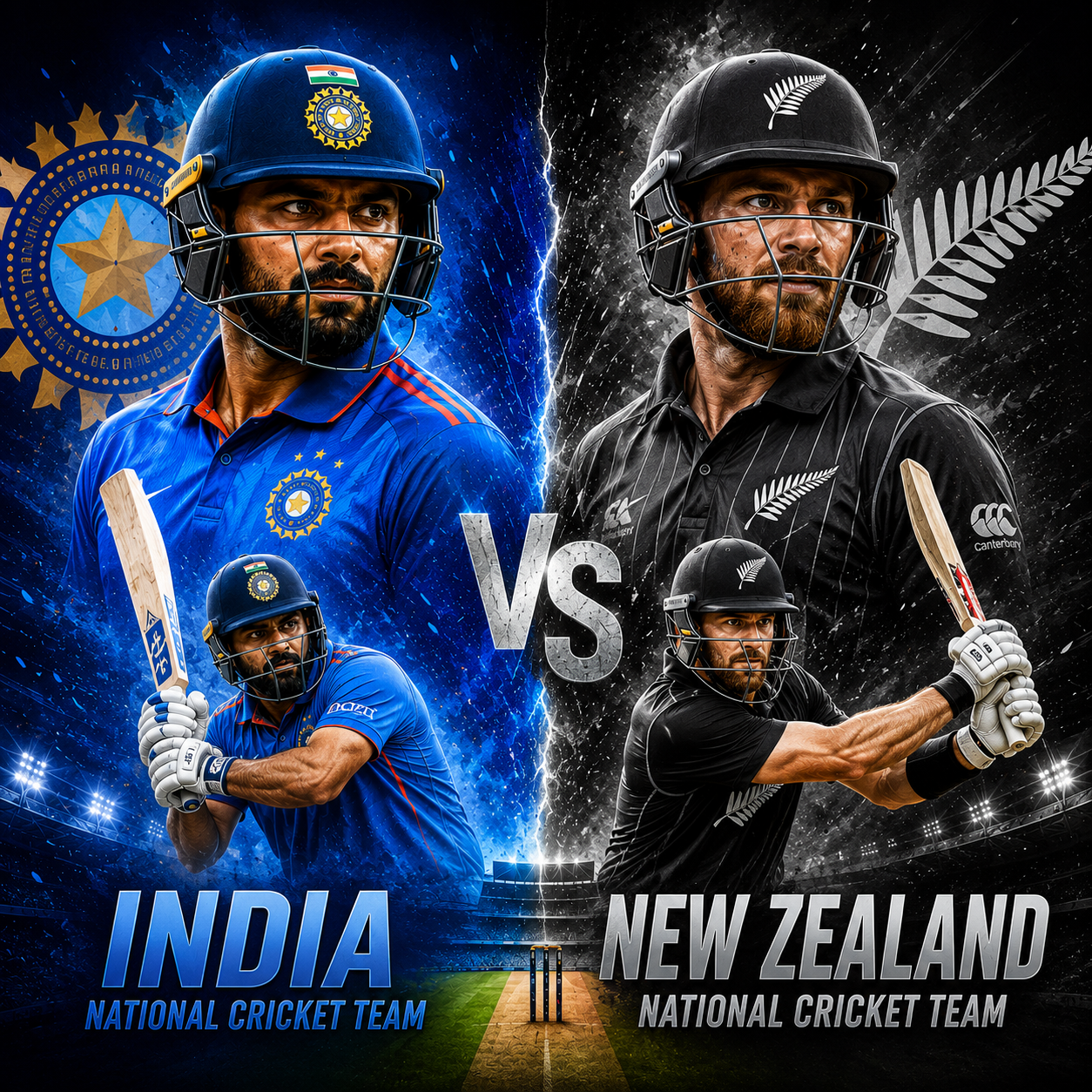
The cricket rivalry between India and New Zealand has developed through decades of memorable contests across Tests, One Day Internationals, and T20 Internationals. While it may not always attract the same spotlight as some other rivalries, it has consistently delivered high-quality cricket, dramatic finishes, and remarkable individual performances. Both teams have built reputations for resilience, adaptability, and tactical excellence in different conditions around the world. From early encounters to modern ICC tournament clashes, their meetings have produced unforgettable moments for players and fans alike. This rivalry continues to evolve, combining tradition, competitiveness, and mutual respect on the international stage.
Recent Matches Table
| Date | Format | Venue | Winner | Margin | Top Scorer | Best Bowler |
|---|---|---|---|---|---|---|
| 08 Mar 2026 | T20I | Ahmedabad | India | 96 runs | S Samson 89 | J Bumrah 4/15 |
| 03 Mar 2026 | T20I | Chandigarh | India | 7 wickets | H Pandya 61 | A Patel 3/21 |
| 01 Mar 2026 | T20I | Bengaluru | New Zealand | 4 wickets | G Phillips 58 | M Santner 3/18 |
| 27 Jan 2026 | ODI | Wellington | India | 6 wickets | S Gill 104 | M Siraj 4/34 |
| 24 Jan 2026 | ODI | Auckland | India | 42 runs | V Kohli 112 | K Yadav 3/42 |
| 21 Jan 2026 | ODI | Hamilton | New Zealand | 5 wickets | D Conway 87 | T Boult 3/29 |
| 15 Nov 2023 | ODI | Mumbai | India | 70 runs | V Kohli 117 | M Shami 7/57 |
Team Statistics Summary Table
| Team | Matches | Won | Lost | Tied | No Result | Win Percentage |
|---|---|---|---|---|---|---|
| India | 120 | 62 | 53 | 1 | 4 | 51.66 |
| New Zealand | 120 | 53 | 62 | 1 | 4 | 44.16 |
| India Home | 45 | 31 | 12 | 0 | 2 | 68.88 |
| India Away | 48 | 21 | 24 | 1 | 2 | 43.75 |
| New Zealand Home | 48 | 24 | 21 | 1 | 2 | 50.00 |
| New Zealand Away | 45 | 12 | 31 | 0 | 2 | 26.66 |
| Neutral Venues | 27 | 10 | 17 | 0 | 0 | 37.03 |
Individual Batting Records Table
| Player | Team | Matches | Innings | Runs | Average | Strike Rate |
|---|---|---|---|---|---|---|
| Virat Kohli | India | 42 | 40 | 1853 | 54.50 | 92.45 |
| Kane Williamson | New Zealand | 38 | 37 | 1489 | 43.79 | 81.36 |
| Rohit Sharma | India | 35 | 34 | 1320 | 40.00 | 95.12 |
| Martin Guptill | New Zealand | 32 | 32 | 1180 | 38.12 | 88.60 |
| Ross Taylor | New Zealand | 34 | 32 | 1145 | 40.89 | 80.23 |
| MS Dhoni | India | 38 | 33 | 985 | 44.77 | 85.30 |
| Shreyas Iyer | India | 18 | 17 | 785 | 49.06 | 98.24 |
Individual Bowling Records Table
| Bowler | Team | Matches | Overs | Wickets | Average | Economy Rate |
|---|---|---|---|---|---|---|
| Tim Southee | New Zealand | 32 | 265.4 | 46 | 28.52 | 5.32 |
| Ravichandran Ashwin | India | 22 | 210.0 | 38 | 25.15 | 4.75 |
| Trent Boult | New Zealand | 24 | 218.2 | 37 | 27.43 | 5.01 |
| Jasprit Bumrah | India | 20 | 172.5 | 35 | 22.11 | 4.62 |
| Mohammed Shami | India | 16 | 138.1 | 32 | 23.40 | 5.56 |
| Mitchell Santner | New Zealand | 25 | 198.0 | 28 | 33.14 | 4.95 |
| Yuzvendra Chahal | India | 14 | 122.0 | 24 | 26.87 | 5.48 |
When Two Cricket Cultures First Crossed Paths
The rivalry began when two cricketing nations with very different styles met on the international stage. One side relied heavily on spin-friendly conditions and technical batting, while the other developed a reputation for discipline, seam bowling, and resilience. Their early meetings were not filled with intense drama, but they laid the foundation for decades of competitive cricket. Tours between the two countries introduced players to unfamiliar conditions and new tactical challenges. These encounters gradually built mutual respect and created a rivalry that would evolve across formats and generations. Every series added another layer to the growing story, helping transform occasional contests into one of cricket’s most respected international matchups.
| Early Era | Main Strength | Challenge | Outcome |
| 1950s | Patience | Unfamiliar pitches | Learning phase |
| 1960s | Technical batting | Overseas tours | Competitive matches |
| 1970s | Spin bowling | Swing conditions | Balanced contests |
| Home Series | Crowd support | Visiting adaptation | Strong performances |
| Away Series | Experience gain | Foreign conditions | Valuable lessons |
The Early Years That Shaped the Contest
The first few decades of competition were marked by adaptation and growth. Visiting teams often struggled because conditions differed dramatically between the two countries. Spin bowlers enjoyed success on dry surfaces, while seamers thrived when movement was available. Several closely fought matches highlighted how small tactical decisions could influence results. Captains focused on patience and discipline rather than aggression. These formative years created many memorable performances and established patterns that would continue for decades. Players learned the importance of adjusting techniques, and fans began recognizing that matches between these sides were rarely straightforward.
| Period | Key Feature | Playing Style | Result Trend |
| 1955-60 | Development | Defensive | Even contests |
| 1960-70 | Adaptation | Balanced | Mixed results |
| 1970-75 | Spin influence | Tactical | Home advantage |
| 1975-80 | Strong bowling | Controlled | Close matches |
| Early Tours | Learning curve | Patient cricket | Valuable experience |
Spin Against Seam: The Tactical Identity of the Rivalry
One of the defining themes of this rivalry has always been the contrast between spin and seam bowling. Conditions frequently dictated strategies, forcing teams to prepare differently depending on the venue. Spin bowlers often controlled matches on slower pitches, creating pressure through accuracy and turn. Fast bowlers, meanwhile, exploited movement and bounce to challenge batters. This battle of styles became a fascinating tactical contest that cricket followers eagerly anticipated. Coaches and captains continually adjusted plans, field placements, and team selections to maximize strengths. The result was a rivalry built not only on talent but also on strategic thinking.
| Aspect | Spin Approach | Seam Approach | Impact |
| Conditions | Dry surfaces | Green pitches | Tactical shift |
| Bowling Style | Control | Movement | Different threats |
| Batting Response | Footwork | Technique | Constant adaptation |
| Captaincy | Patience | Aggression | Strategic variety |
| Match Result | Pressure build-up | Quick breakthroughs | Competitive balance |
The Rise of New Heroes in the 1980s and 1990s
The rivalry entered a new phase as emerging stars brought fresh energy and higher expectations. Batters played with greater confidence, bowlers developed more attacking plans, and teams became increasingly professional. Several memorable matches during this era produced standout performances that remained part of cricket folklore. Captains introduced innovative tactics, while fans became more emotionally invested in results. Television coverage expanded the audience and helped turn major contests into highly anticipated events. The rivalry gained momentum through thrilling encounters and individual brilliance that inspired future generations.
| Decade | Major Change | Key Strength | Fan Interest |
| 1980s | Emerging talent | Strong bowling | Growing support |
| Late 1980s | Better tactics | Team balance | Increased attention |
| Early 1990s | Aggressive batting | Adaptability | Wider audience |
| Mid 1990s | Competitive series | All-round skills | Strong engagement |
| Late 1990s | Professional era | Consistency | Global appeal |
World Cup Meetings That Raised the Stakes
Tournament encounters added a completely different level of pressure to the rivalry. Every run, wicket, and decision carried greater significance because elimination or advancement often depended on the result. Players faced intense scrutiny while supporters followed every moment with passion. Some matches produced unforgettable turning points and dramatic finishes that influenced tournament outcomes. The atmosphere surrounding these games elevated the rivalry beyond bilateral cricket. Success on the world stage became a source of pride, making every meeting feel larger than a regular international fixture.
| Tournament Stage | Pressure Level | Key Factor | Importance |
| Group Match | Moderate | Momentum | Valuable points |
| Super Stage | High | Qualification | Major impact |
| Semi-Final | Very High | Nerve control | Historic significance |
| Knockout Match | Extreme | Execution | Tournament survival |
| Global Event | Maximum | Team performance | Worldwide attention |
Sachin Tendulkar and Stephen Fleming: A New Chapter
A fresh chapter emerged when influential leaders and world-class performers became central figures in the rivalry. Their consistency, decision-making, and ability to inspire teammates elevated the quality of competition. Matches often featured strategic battles between experienced captains and highly skilled players. Individual performances frequently shaped results, while leadership styles provided fascinating contrasts. This period demonstrated how elite players could influence not only scoreboards but also the direction of entire series. Their contributions helped strengthen the rivalry’s reputation across the cricketing world.
| Role | Contribution | Strength | Influence |
| Captaincy | Tactical planning | Leadership | Team direction |
| Batting | Run scoring | Consistency | Match control |
| Bowling | Key wickets | Accuracy | Pressure creation |
| Fielding | Energy | Athleticism | Momentum shift |
| Experience | Decision making | Composure | Stability |
The Sehwag and Dravid Era of Dominance
As batting lineups became stronger and more confident, the rivalry produced several high-quality contests. Teams focused on building partnerships, maintaining pressure, and capitalizing on key moments. Strong batting foundations combined with disciplined bowling performances often determined outcomes. This era highlighted the importance of balance, with successful teams excelling across all departments. Memorable victories, record partnerships, and outstanding individual displays contributed to the rivalry’s growing legacy. Supporters witnessed cricket of exceptional quality, reinforcing the status of these contests among the most anticipated fixtures on the international calendar.
| Element | Contribution | Result |
| Opening Partnerships | Strong starts | Better totals |
| Middle Order | Stability | Match control |
| Bowling Unit | Consistent pressure | Key wickets |
| Team Balance | All-round strength | Competitive edge |
| Leadership | Tactical awareness | Important victories |
Conclusion
The story of India and New Zealand in international cricket is one of persistence, evolution, and competitive spirit. Across generations, both teams have challenged each other in unique ways, creating a rivalry defined by skill rather than hostility. Memorable victories, heartbreaking defeats, and iconic performances have shaped its legacy over the years. Whether in bilateral series or major global tournaments, their encounters have often carried significant importance and produced lasting memories. As new players emerge and fresh chapters unfold, this rivalry remains one of the most respected and fascinating contests in world cricket, continuing to capture the attention of fans everywhere.
Frequently Asked Questions
What makes the India and New Zealand cricket rivalry unique?
The rivalry is known for its balance of competition, tactical battles, and contrasting playing conditions, which often create unpredictable and exciting matches.
Which format has produced the most memorable matches between the two teams?
All formats have delivered memorable contests, but ICC tournament matches and Test series have often produced the most significant moments.
Why are matches between these teams usually competitive?
Both sides are known for strong team structures, disciplined cricket, and the ability to adapt effectively to different conditions.
Have the teams faced each other in major ICC knockout matches?
Yes, they have met in several important ICC events, including World Cup and World Test Championship matches that had major implications.
Which factors often decide the outcome of their matches?
Pitch conditions, bowling effectiveness, key partnerships, captaincy decisions, and handling pressure situations are usually the most important factors.