Table of Contents
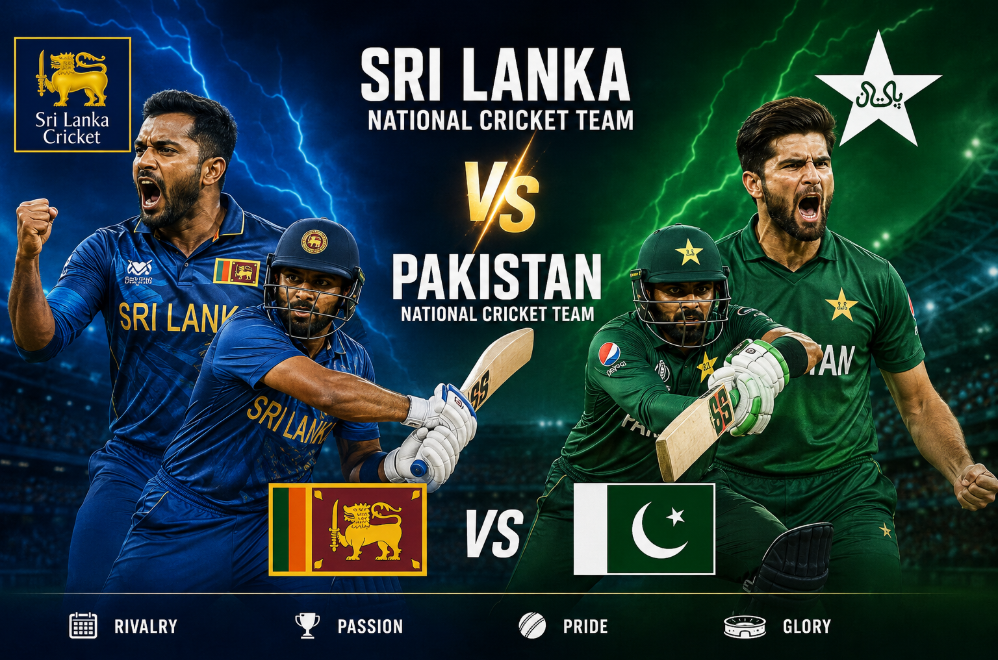
The cricket rivalry between the Sri Lanka National Cricket Team and the Pakistan National Cricket Team has evolved into one of Asia’s most competitive and emotionally charged battles. From the early days when Sri Lanka struggled to stand against Pakistan’s pace-heavy attack, to modern clashes defined by tactical depth and rising superstars, every encounter has added a new chapter to this long story. The scorecards alone do not capture the full intensity, as these matches often reflect pressure, pride, and shifting dominance. Over the decades, both teams have produced unforgettable performances that shaped not only series results but also the identity of Asian cricket rivalry as a whole.
Matches Table
| Match Date | Format | Ground | Winner | Margin |
|---|---|---|---|---|
| 28 Feb 2026 | T20I | Pallekele | Pakistan | 5 runs |
| 11 Jan 2026 | T20I | Dambulla | Sri Lanka | 14 runs |
| 07 Jan 2026 | T20I | Dambulla | Pakistan | 6 wickets |
| 29 Nov 2025 | T20I | Rawalpindi | Pakistan | 6 wickets |
| 27 Nov 2025 | T20I | Rawalpindi | Sri Lanka | 6 runs |
| 22 Nov 2025 | T20I | Rawalpindi | Pakistan | 7 wickets |
| 16 Nov 2025 | ODI | Rawalpindi | Pakistan | 6 wickets |
| 14 Nov 2025 | ODI | Rawalpindi | Pakistan | 8 wickets |
| 11 Nov 2025 | ODI | Rawalpindi | Pakistan | 6 runs |
| 23 Sep 2025 | T20I | Abu Dhabi | Pakistan | 5 wickets |
| 10 Oct 2023 | ODI | Hyderabad | Pakistan | 6 wickets |
| 14 Sep 2023 | ODI | Colombo | Sri Lanka | 2 wickets |
| 24-28 Jul 2023 | Test | Colombo | Pakistan | Innings and 222 runs |
| 16-20 Jul 2023 | Test | Galle | Pakistan | 4 wickets |
Team Statistics Summary Table
| Format | Total Matches | Pakistan Wins | Sri Lanka Wins | Draws / No Result / Tied |
|---|---|---|---|---|
| Test Matches | 59 | 23 | 17 | 19 |
| One-Day Internationals | 158 | 93 | 57 | 8 |
| Twenty20 Internationals | 31 | 19 | 12 | 0 |
| Overall Combined | 248 | 135 | 86 | 27 |
Individual Batting Records Table
| Player | Team | Career Span | Total Runs |
|---|---|---|---|
| Kumar Sangakkara | Sri Lanka | 2000-2015 | 4885 |
| Sanath Jayasuriya | Sri Lanka | 1989-2009 | 4126 |
| Inzamam-ul-Haq | Pakistan | 1992-2006 | 3824 |
| Aravinda de Silva | Sri Lanka | 1984-2002 | 3794 |
| Mahela Jayawardene | Sri Lanka | 1998-2015 | 3634 |
Individual Bowling Records Table
| Player | Team | Career Span | Total Runs Allowed / Conceded |
|---|---|---|---|
| Muttiah Muralidaran | Sri Lanka | 1993-2011 | 4539 |
| Waqar Younis | Pakistan | 1989-2002 | 3319 |
| Wasim Akram | Pakistan | 1985-2002 | 3269 |
| Rangana Herath | Sri Lanka | 2000-2017 | 3223 |
| Saeed Ajmal | Pakistan | 2008-2014 | 2248 |
Rivalry Origins
The rivalry between Sri Lanka and Pakistan began in the early years of Sri Lanka’s Test status when they were still finding their identity in international cricket. Pakistan entered the contests as a more established and aggressive side, built on world-class pace and experienced batting depth. Sri Lanka, meanwhile, relied on resilience and gradual improvement. Early encounters were less about equal competition and more about learning survival at the highest level. Pakistan’s bowlers regularly exposed technical gaps, but Sri Lanka’s patience slowly began to show promise. These early matches laid the emotional foundation of a rivalry that would grow into one of Asia’s most competitive cricket battles over the following decades.
| Season | Score Summary | Winning Side | Performance Impact | Key Highlight |
|---|---|---|---|---|
| 1982-85 | Pakistan dominant | Pakistan | One-sided early phase | Fast bowling attack |
| 1985-88 | Mixed struggles | Pakistan | Sri Lanka learning phase | Batting collapses |
| 1988-90 | Competitive rise | Pakistan | Sri Lanka improving | Spin introduction |
| 1990-92 | Narrow gaps | Pakistan | Emerging rivalry tone | First close finishes |
Early Clashes in the 1980s
The early clashes in the 1980s were defined by Pakistan’s control and Sri Lanka’s struggle to adapt to international pressure. Pakistan’s pace attack consistently dominated the conditions, making batting extremely difficult for Sri Lankan top-order players. Sri Lanka’s approach was cautious, often focused on avoiding collapse rather than chasing victory. However, these matches also revealed early signs of resilience, especially from Sri Lankan middle-order batters who began showing resistance against world-class bowling. Pakistan’s dominance in scorecards reflected experience, but Sri Lanka’s gradual improvement in partnerships hinted at a future shift in balance. This decade set the tone for a rivalry that would later become far more competitive and emotionally charged.
| Season | Score Summary | Winning Side | Performance Impact | Key Highlight |
|---|---|---|---|---|
| 1980-82 | Low scoring games | Pakistan | Pace dominance | Early collapses |
| 1982-84 | Heavy defeats SL | Pakistan | Learning phase | Swing bowling impact |
| 1984-86 | Slight resistance | Pakistan | Batting stability starts | Middle-order fight |
| 1986-88 | Competitive signs | Pakistan | Confidence growth SL | Spin experimentation |
Pakistan Dominance Era
During the Pakistan dominance era, the team established itself as a force built on aggressive fast bowling and disciplined batting. Their pace trio consistently dismantled Sri Lankan batting line-ups, often restricting them to low totals. Sri Lanka found it difficult to build partnerships, and matches frequently ended in convincing Pakistani victories. This era highlighted Pakistan’s tactical superiority in both home and away conditions. However, beneath the dominance, Sri Lanka was quietly rebuilding its strategy, focusing on technical improvements and spin development. While the scorecards show one-sided results, this phase was crucial in shaping Sri Lanka’s future competitive identity against Pakistan’s aggressive cricketing philosophy.
| Season | Score Summary | Winning Side | Performance Impact | Key Highlight |
|---|---|---|---|---|
| 1988-90 | One-sided wins | Pakistan | Pace control | Top-order collapse SL |
| 1990-92 | Strong Pakistan wins | Pakistan | Tactical dominance | Reverse swing emergence |
| 1992-94 | Occasional resistance | Pakistan | SL rebuilding phase | Spin introduction |
| 1994-96 | Competitive hints | Pakistan | Momentum shift begins | Partnership growth SL |
Rise in the 1990s
The 1990s marked a major transformation as Sri Lanka evolved from underdogs into serious contenders. Under strong leadership and tactical innovation, Sri Lanka began challenging Pakistan with fearless batting and world-class spin bowling. Players like Aravinda de Silva and Arjuna Ranatunga changed the mindset of the team, shifting from survival to domination. Matches became more competitive, and Sri Lanka started winning crucial encounters, especially in limited-overs formats. Pakistan still remained strong, but the gap was narrowing quickly. Scorecards began reflecting closer contests, with high-scoring thrillers replacing one-sided games. This decade officially turned the rivalry into a balanced and emotionally charged cricket battle.
| Season | Score Summary | Winning Side | Performance Impact | Key Highlight |
|---|---|---|---|---|
| 1990-92 | Competitive draws | Pakistan | SL rising confidence | Batting stability |
| 1992-94 | Mixed results | Pakistan | SL tactical growth | Spin dominance |
| 1994-96 | Balanced contests | Sri Lanka/Pak | Equal rivalry starts | World Cup momentum |
| 1996-99 | High intensity games | Sri Lanka | Peak transformation | World Cup impact |
1996 World Cup Effect
Sri Lanka’s 1996 World Cup victory had a massive psychological impact on their rivalry with Pakistan. It completely changed how Sri Lanka approached high-pressure games, especially against strong teams like Pakistan. The confidence gained from winning a global tournament translated into more aggressive batting and smarter bowling strategies. Pakistan, meanwhile, had to adjust to a Sri Lankan side that no longer played defensively. Matches after 1996 became more unpredictable, with momentum swinging rapidly. Scorecards reflected higher totals and tighter finishes, showing how Sri Lanka’s mindset shift had elevated the rivalry to a new competitive level where neither side could dominate easily for long.
| Season | Score Summary | Winning Side | Performance Impact | Key Highlight |
|---|---|---|---|---|
| 1996 | World Cup peak SL | Sri Lanka | Confidence boost | Tournament win |
| 1996-97 | High scoring games | Sri Lanka | Aggressive mindset | Batting power shift |
| 1997-98 | Close contests | Mixed | Balanced rivalry | Tactical battles |
| 1998-99 | Competitive edges | Sri Lanka | Winning mentality | Pressure handling |
Asia Cup Battles
Asia Cup encounters between Sri Lanka and Pakistan are among the most intense moments of their rivalry. These matches often carried high pressure due to regional pride and tournament stakes. Pakistan’s fast bowlers frequently targeted Sri Lankan top orders, while Sri Lanka relied heavily on spin control and middle-order stability. Many matches went down to the final overs, creating unforgettable finishes and emotional reactions from fans across both nations. The Asia Cup stage amplified every mistake and every moment of brilliance. Scorecards from these encounters reflect tight margins, dramatic collapses, and match-winning performances that defined careers and strengthened the rivalry’s reputation in Asian cricket history.
| Season | Score Summary | Winning Side | Performance Impact | Key Highlight |
|---|---|---|---|---|
| 2000-04 | Close finishes | Sri Lanka | Tactical excellence | Spin control |
| 2004-08 | High pressure games | Pakistan | Pace dominance returns | Death overs impact |
| 2008-12 | Balanced rivalry | Mixed | Equal competition | Last-over thrillers |
| 2012-16 | Tactical battles | Sri Lanka | Experience edge | Batting depth |
Conclusion
The journey of Sri Lanka vs Pakistan cricket matches shows how a rivalry can transform from one-sided beginnings into a balanced and thrilling contest. Pakistan’s early dominance built the foundation, while Sri Lanka’s rise in the 1990s changed the competitive equation completely. Across eras, both teams have exchanged control through powerful batting displays, lethal bowling spells, and unforgettable finishes. The scorecards reveal shifting momentum, but the real story lies in resilience, adaptation, and pride. Today, this rivalry stands as a symbol of evolving Asian cricket, where every match still carries the weight of history and the promise of new iconic moments.
FAQs
What is the overall head-to-head record between Sri Lanka and Pakistan in international cricket?
Pakistan has historically held a stronger head-to-head record, especially in the early decades. However, Sri Lanka significantly reduced the gap after the 1990s, making the rivalry far more balanced in ODIs and T20Is with frequent competitive matches and close finishes.
Which match is considered the most iconic Sri Lanka vs Pakistan encounter?
The 1996 World Cup era matches and several Asia Cup clashes are considered iconic. Sri Lanka’s rise during this period, combined with Pakistan’s strong bowling attack, produced dramatic contests, memorable partnerships, and momentum-shifting performances that defined the rivalry’s peak intensity.
Who are the top performers in Sri Lanka vs Pakistan matches?
For Pakistan, players like Wasim Akram, Waqar Younis, and Inzamam-ul-Haq stood out. For Sri Lanka, legends such as Muttiah Muralitharan, Sanath Jayasuriya, and Aravinda de Silva delivered match-winning performances across formats, shaping many key scorecards.
Why is the Sri Lanka vs Pakistan rivalry considered intense in Asia?
The rivalry is intense due to contrasting styles, Pakistan’s pace strength against Sri Lanka’s spin and batting evolution. High-pressure tournament clashes, close finishes, and passionate fan bases from both countries add emotional weight to every encounter.
How has the rivalry changed in modern cricket?
In modern cricket, the rivalry has become more balanced with T20 influence, aggressive batting, and data-driven strategies. Both teams now rely on all-rounders, flexible batting orders, and death-over specialists, making matches unpredictable and highly competitive.