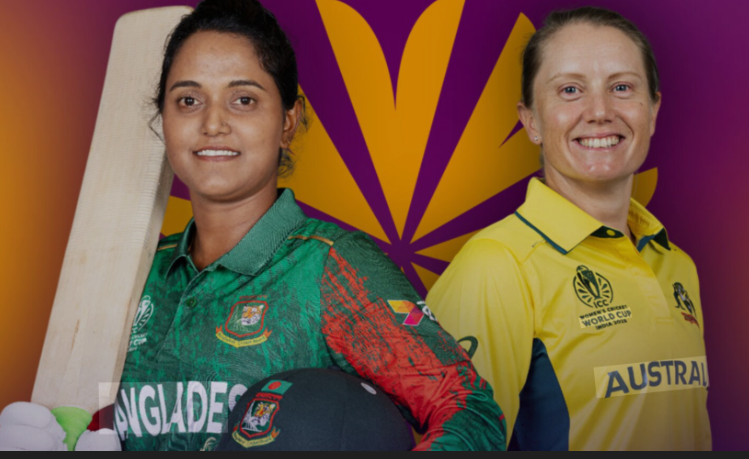
The journey between these two sides reflects a classic story of dominance meeting development in modern women’s cricket. One team entered the international stage with a strong legacy, deep squad strength, and proven match-winning experience, while the other side worked hard to establish its identity through exposure and gradual improvement. Across different ICC events and bilateral contests, their encounters have highlighted clear differences in skill, temperament, and tactical execution. Yet, beyond the scorelines, these matches also tell a deeper story of learning, resilience, and evolution. Each meeting has added a new chapter, shaping the broader narrative of growth and global competitiveness in women’s cricket.
Recent Matches Table
Date
Format
Venue
Winner
Margin
First Innings
Second Innings
16 October 2025
ODI
Visakhapatnam
Australia
10 wickets
Bangladesh 198/9
Australia 202/0
4 April 2024
T20I
Dhaka
Australia
77 runs
Australia 155/6
Bangladesh 78 all out
2 April 2024
T20I
Dhaka
Australia
58 runs
Australia 161/8
Bangladesh 103/9
31 March 2024
T20I
Dhaka
Australia
10 wickets
Bangladesh 126/4
Australia 127/0
27 March 2024
ODI
Dhaka
Australia
8 wickets
Bangladesh 89 all out
Australia 93/2
24 March 2024
ODI
Dhaka
Australia
6 wickets
Bangladesh 97 all out
Australia 98/4
Team Statistics Summary Table
Metric
Overall Matches
Matches Won by Australia
Matches Won by Bangladesh
Tied Matches
No Result
Win Percentage Australia
ODI Format
5
5
0
0
0
100%
T20I Format
5
5
0
0
0
100%
Total Head to Head
10
10
0
0
0
100%
Home Matches (BAN)
6
6
0
0
0
100%
Neutral Matches
4
4
0
0
0
100%
World Cup Matches
4
4
0
0
0
100%
Individual Batting Records Table
Player Name
Team
Match Format
Total Runs scored
Highest Score
Batting Average
Strike Rate
Alyssa Healy
Australia
ODI/T20I
312
113
62.40
118.63
Beth Mooney
Australia
ODI/T20I
241
66
60.25
89.25
Georgia Wareham
Australia
ODI/T20I
104
57
34.66
115.55
Nigar Sultana
Bangladesh
ODI/T20I
185
50
20.55
68.51
Sobhana Mostary
Bangladesh
ODI/T20I
128
66
18.28
64.32
Phoebe Litchfield
Australia
ODI
84
84
84.00
112.00
Individual Bowling Records Table
Player Name
Team
Match Format
Total Wickets Taken
Best Bowling Figures
Bowling Average
Economy Rate
Alana King
Australia
ODI/T20I
11
3 for 12
10.45
3.42
Georgia Wareham
Australia
ODI/T20I
10
3 for 20
12.30
4.88
Sophie Molineux
Australia
ODI/T20I
9
3 for 10
11.11
3.12
Kim Garth
Australia
ODI/T20I
8
3 for 11
14.25
3.65
Fariha Trisna
Bangladesh
T20I
6
3 for 19
18.50
6.82
Sultana Khatun
Bangladesh
ODI/T20I
5
2 for 22
28.40
5.34
Early International Entry and First Encounters
The early phase of women’s international cricket saw contrasting journeys between two teams with very different levels of exposure. One side entered the global stage with years of structured development, strong domestic systems, and consistent international experience. The other side was still finding its rhythm, focusing on building confidence and adapting to elite competition standards. When both teams first met in global tournaments, the difference in execution was clearly visible. The stronger side relied on disciplined bowling units and stable batting depth, while the emerging team struggled to convert starts into meaningful totals. Despite the imbalance, the matches were important learning experiences. Players from the developing side gained exposure to world-class pace, spin variation, and fielding intensity. These early encounters laid the foundation for a long journey of growth, shaping the competitive identity of the younger team while reinforcing dominance for the established side.
Aspect
Observation
Impact
Trend
Experience gap
High contrast
One-sided results
Learning phase
Batting strength
Strong vs weak
Big score difference
Developing stage
Bowling quality
Disciplined attack
Frequent wickets
Dominance pattern
Match pressure
Uneven handling
Collapse moments
Growth needed
Establishing Early Dominance in Global Tournaments
As international tournaments progressed, a clear pattern of dominance began to emerge. The stronger team consistently displayed control over all three departments, particularly in high-pressure ICC events. Their top-order batters provided solid starts, allowing middle-order players to accelerate confidently. In contrast, the developing side often found itself struggling against disciplined bowling attacks that exploited technical weaknesses. The gap in strike rotation and boundary conversion became evident in most scorecards. Bowling performances also highlighted the difference, as the dominant side maintained tight lines and executed plans with precision. Even when conditions slightly favored slower bowlers, the experienced team adapted quickly. These matches were not just contests but demonstrations of structured preparation and execution. However, they also highlighted the determination of the emerging side, which continued to fight for respect despite repeated setbacks on the scoreboard.
Factor
Strong Team
Emerging Team
Outcome
Batting start
Stable
Inconsistent
Advantage one side
Bowling attack
Structured
Developing
Wickets difference
Pressure handling
Excellent
Struggled
Collapse risk
Tournament impact
High control
Learning curve
Predictable results
Signs of Resistance and Competitive Growth
Over time, subtle but important changes began to appear in the competitive dynamic. The emerging side started showing resistance in patches of play, especially through improved partnerships and better shot selection. Batters began spending more time at the crease, reducing the frequency of early collapses. While the overall match results still favored the stronger team, there were moments where momentum briefly shifted. Bowlers from the developing side also began to extract movement and create pressure in the middle overs. Fielding standards improved slightly, cutting down unnecessary runs. These small improvements signaled a gradual transformation in approach and mindset. The stronger team, however, continued to rely on experience and tactical awareness to regain control whenever challenged. These phases of resistance added new energy to the contests, making them more competitive than earlier encounters, even if the final outcomes remained largely unchanged.
Area
Improvement
Weakness
Effect
Batting
Better partnerships
Still inconsistent
Stability rise
Bowling
Improved spells
Lack of depth
Partial pressure
Fielding
More alert
Occasional drops
Mixed impact
Strategy
More planned
Limited execution
Gradual progress
Pressure Moments in High Stakes Matches
In major global tournaments, pressure became a defining factor in shaping match outcomes. The stronger side consistently handled knockout scenarios with composure, relying on experienced players to anchor innings and finish strongly. Their ability to absorb pressure in critical overs separated them from the rest. The developing team, on the other hand, often struggled in similar situations, where early wickets or scoring droughts led to increased pressure. Despite this, there were notable phases where they resisted collapse and built competitive totals. These moments showed growing mental strength and tactical awareness. However, the inability to sustain pressure across full innings remained a challenge. The experienced team’s superior game management ensured that even close phases were converted into comfortable wins. These encounters highlighted how pressure handling, rather than just skill, often determines outcomes in elite international cricket.
Situation
Strong Side Response
Emerging Side Response
Result
Early wickets
Controlled recovery
Panic phase
Advantage strong side
Middle overs
Stable rotation
Irregular scoring
Pressure build
Death overs
Accelerated finish
Wicket losses
Score gap
Knockouts
Calm execution
Breakdown
Clear dominance
Tactical Evolution Across Formats
As both teams played across formats, tactical evolution became more visible. The dominant side demonstrated flexibility in batting order, powerplay aggression, and bowling rotations. They adapted strategies depending on pitch conditions and opposition strengths. Their use of spin in middle overs and pace variation at the death created consistent breakthroughs. The developing team slowly began adjusting its approach, focusing on reducing dot balls and improving strike rotation. Coaches emphasized building partnerships rather than relying on individual brilliance. However, execution remained inconsistent under pressure. Field placements and bowling changes improved over time, showing signs of strategic learning. The difference in tactical maturity remained significant, but the gap was narrowing gradually. Each encounter added new lessons, contributing to long-term development for the emerging side while reinforcing the adaptability of the experienced team.
Tactical Area
Experienced Team
Developing Team
Effect
Batting order
Flexible
Fixed
Limited adaptability
Bowling plans
Dynamic
Basic
Control difference
Powerplay use
Aggressive
Conservative
Run rate gap
Field strategy
Advanced
Developing
Experience edge
Bowling and Batting Balance Comparison
One of the most defining aspects of these encounters has been the balance between batting depth and bowling control. The stronger side consistently displayed a well-rounded structure, where both departments supported each other effectively. Batters could play freely knowing the bowling unit could defend totals confidently. On the other hand, the developing side often struggled with imbalance, where either batting collapsed or bowling lacked penetration. This inconsistency made it difficult to sustain pressure throughout a match. There were, however, individual performances that stood out, especially from young players showing promise under challenging conditions. The stronger side’s ability to maintain partnerships and take wickets at regular intervals ensured control in almost every phase. This balance difference became a key reason behind repeated match outcomes.
Department
Strong Side
Emerging Side
Key Difference
Batting
Deep lineup
Inconsistent
Stability gap
Bowling
Consistent
Irregular
Wicket flow
Partnerships
Strong
Developing
Experience edge
Match control
High
Low
Balance issue
Fielding Standards and Match Impact
Fielding has played a crucial role in shaping the competitive gap between both teams. The stronger side consistently displayed high energy, sharp reflexes, and excellent coordination on the field. Their ability to save boundaries and convert half chances into wickets added immense pressure on opponents. Direct hits and quick throws became routine features of their gameplay. In contrast, the developing side showed gradual improvement but remained inconsistent under pressure situations. Dropped catches and misfields occasionally shifted momentum away from them. However, improvement over time was noticeable, especially in ground fielding and positioning awareness. The stronger side’s fielding intensity often compensated even when batting or bowling was slightly off rhythm. This department alone often became a deciding factor in close phases of matches.
Fielding Aspect
Strong Side
Emerging Side
Impact
Catching
Reliable
Improving
Key difference
Ground fielding
Elite
Moderate
Run control
Direct hits
Frequent
Rare
Momentum shift
Pressure handling
Strong
Developing
Match influence
Overall Competitive Evolution and Legacy
Over time, the competitive relationship between these two teams has evolved into a narrative of dominance and development. One side continues to set global standards with consistency, depth, and tactical intelligence. The other side, despite early struggles, has shown steady progress through exposure and experience. Each encounter has contributed to shaping the identity of the emerging team, helping them understand the demands of international cricket. While the scorecards often reflect one-sided outcomes, the underlying story is one of learning, adaptation, and gradual improvement. The stronger team remains a benchmark of excellence, while the developing side continues to build its foundation for future competitiveness. This evolving dynamic ensures that future encounters may become more balanced as experience and confidence grow.
Phase
Strong Team Role
Emerging Team Role
Outcome
Early years
Dominance
Learning
One-sided
Middle phase
Control
Resistance
Gradual change
Recent phase
Stability
Growth
Narrowing gap
Future outlook
Benchmark
Development
Competitive rise
Conclusion
The overall timeline of this rivalry showcases a consistent pattern of dominance, but also steady progress from the developing side. While one team has maintained its position as a global powerhouse through discipline and depth, the other has used every encounter as a stepping stone toward improvement. Scorecards often reflect one-sided results, yet they also reveal moments of resistance and promise. Over time, the gap has shown signs of gradual narrowing in certain phases. This journey stands as a reminder that sustained exposure to elite competition is essential for growth, and future contests may bring a more balanced and competitive rivalry.