Table of Contents
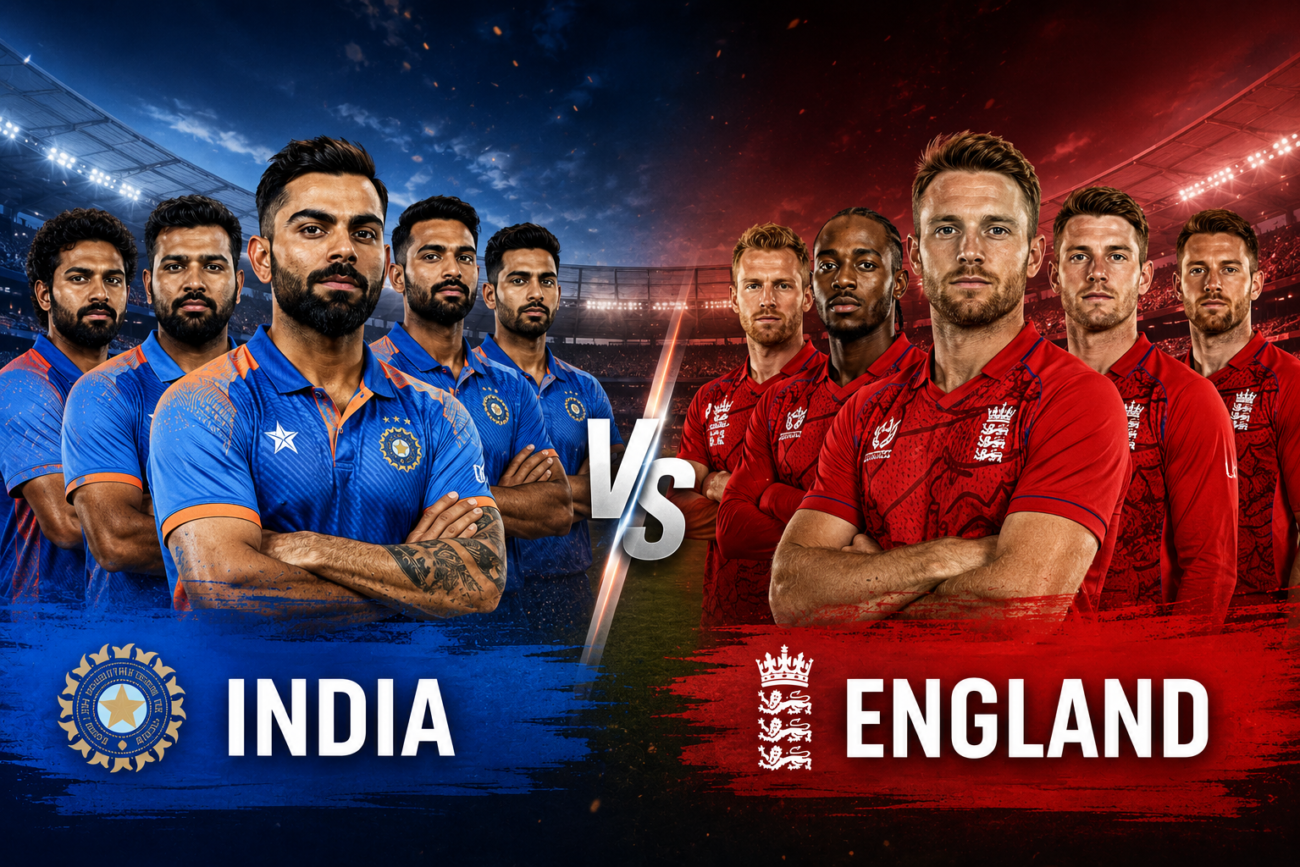
When discussing the greatest rivalries in world cricket, India National Cricket Team Vs England Cricket Team Matches deserve a special place. Few contests carry the weight of history, colonial connections, sporting evolution, and passionate fan support quite like encounters between these two cricketing giants.
What began as a one-sided relationship during India’s early years in international cricket has transformed into one of the sport’s most competitive rivalries. From timeless Test battles at Lord’s to high-pressure World Cup clashes and dramatic T20 encounters, India and England have repeatedly produced matches that define generations. Their contests have showcased legendary cricketers, tactical innovation, and some of cricket’s most unforgettable moments.
The Origins of a Historic Cricket Relationship
The story of India and England on the cricket field dates back to 1932 when India played its first-ever Test match at Lord’s. That match was far more than a sporting contest. It symbolized India’s arrival on cricket’s biggest stage.
England entered the contest as an established cricket powerhouse, while India was a newcomer learning the demands of international competition. Despite the difference in experience, India’s performance earned respect across the cricketing world.
Over the following decades, England became one of India’s most frequent opponents. The rivalry evolved alongside India’s cricketing growth. By the 1970s and 1980s, India had developed the ability to challenge England consistently, particularly in subcontinental conditions.
The relationship between the teams became unique because both sides influenced each other’s cricketing culture. England introduced many technical and strategic traditions, while India brought flair, spin mastery, and eventually commercial power that reshaped global cricket.
Key Historical Milestones
| Year | Milestone | Significance |
|---|---|---|
| 1932 | India’s first Test match | Beginning of international journey |
| 1952 | India’s first Test win vs England | Historic breakthrough |
| 1971 | Series win in England | Major turning point |
| 1983 | World Cup era begins | India’s global rise |
| 2007 | T20 World Cup period | New rivalry dimension |
| 2011 | World Cup encounters gain prominence | White-ball importance grows |
Each milestone marked a shift in competitive balance and reflected the changing landscape of world cricket.
India National Cricket Team Vs England Cricket Team Matches Across Formats
One reason this rivalry remains fascinating is its presence across every format. Unlike many traditional rivalries that are primarily Test-based, India and England have produced memorable contests in Tests, One Day Internationals, and T20 Internationals.
Overall Format Comparison
| Format | First Meeting | Rivalry Character |
|---|---|---|
| Test Cricket | 1932 | Traditional and tactical |
| ODI Cricket | 1974 | Competitive and evolving |
| T20I Cricket | 2007 | Explosive and unpredictable |
| World Cups | 1975 onward | High-pressure contests |
The rivalry changes dramatically depending on format. Test matches often become battles of endurance and technical excellence. ODI matches emphasize adaptability and strategy, while T20 contests showcase aggressive batting and innovative bowling tactics.
This versatility has helped maintain fan interest across generations.
Test Cricket: Where the Rivalry Built Its Legacy
Test cricket remains the foundation of India-England cricket relations. Many of the rivalry’s most iconic moments have come in the longest format.
England historically dominated early encounters due to superior infrastructure and experience. However, India’s rise as a formidable Test nation changed the balance significantly.
Series between the two nations frequently produce defining performances. English seamers traditionally enjoy home conditions, while Indian spinners often dominate on turning pitches in the subcontinent.
Memorable Test Series
| Series | Outcome | Historical Importance |
|---|---|---|
| 1971 England Tour | India won | First series victory in England |
| 1986 England Tour | India won | Confirmed overseas capability |
| 2002 England Tour | Drawn | Competitive balance restored |
| 2007 England Tour | India won | Modern-era achievement |
| 2021-22 Series | Closely contested | High-quality cricket |
The 1971 series remains particularly significant. Led by the legendary Ajit Wadekar, India achieved a landmark victory that changed perceptions worldwide.
Many historians view that triumph as the moment India transitioned from participant to contender in international cricket.
ODI Encounters That Captivated Millions
While Tests built the rivalry’s foundation, One Day Internationals expanded its global appeal.
India and England have played numerous memorable ODI matches featuring dramatic run chases, World Cup battles, and individual brilliance. As limited-overs cricket evolved, both teams adapted differently.
England embraced aggressive analytics-driven cricket during the mid-2010s. India combined traditional batting depth with modern power-hitting.
Notable ODI Records
| Category | India | England |
|---|---|---|
| Highest Team Totals | Multiple 350+ scores | Multiple 400+ scores |
| Famous Chases | Several successful pursuits | Aggressive batting era successes |
| World Cup Meetings | Numerous | Numerous |
| Superstar Contributors | Multiple generations | Multiple generations |
One fascinating aspect of ODI meetings is how they reflect cricket’s changing philosophies. Earlier matches emphasized accumulation and patience. Modern encounters frequently involve totals exceeding 300 runs, demonstrating the sport’s evolution.
The rivalry has effectively served as a timeline of ODI cricket’s development.
The T20 Era and a New Competitive Balance
The introduction of T20 cricket added fresh energy to India National Cricket Team Vs England Cricket Team Matches.
Both nations quickly became major forces in the format. India benefited from the popularity and competitiveness of the Indian Premier League, while England developed one of the world’s most aggressive white-ball systems.
The result has been a series of thrilling contests featuring explosive batting displays and innovative tactics.
Major T20 Moments
| Event | Importance |
|---|---|
| 2007 World T20 Meetings | Beginning of rivalry in format |
| Bilateral T20 Series | Consistent competition |
| World Cup Knockout Matches | Increased pressure |
| Franchise Influence | Tactical cross-pollination |
Perhaps the most interesting feature of modern T20 encounters is how familiar players have become with each other through franchise leagues. This familiarity creates a tactical chess match where surprise and adaptability become critical.
Legendary Players Who Defined the Rivalry
Every great rivalry is shaped by extraordinary players. India versus England has produced countless individual stories that continue to inspire cricket fans.
Iconic Contributors
| India | England |
|---|---|
| Sunil Gavaskar | Ian Botham |
| Kapil Dev | Graham Gooch |
| Sachin Tendulkar | Andrew Flintoff |
| Rahul Dravid | Joe Root |
| Virat Kohli | Ben Stokes |
These players did more than accumulate statistics. They influenced how the rivalry was perceived.
Tendulkar’s mastery against English bowling attacks, Dravid’s resilience in challenging conditions, and Kohli’s aggressive leadership all became defining chapters. Similarly, Botham, Flintoff, Root, and Stokes repeatedly delivered performances that altered series outcomes.
Their contributions transformed matches into cultural events.
Records and Statistics That Explain the Rivalry
Statistics alone cannot define a rivalry, but they reveal fascinating patterns.
Important Rivalry Facts
| Record Type | Observation |
|---|---|
| Longest Format History | Began in 1932 |
| Most Frequent Format | Test cricket |
| Shared Cricket Heritage | Nearly a century |
| Global Audience | Hundreds of millions |
| Major Tournament Meetings | Multiple World Cups |
One notable trend is how competitive the rivalry has become over time. England dominated the early decades, but India’s growth has significantly narrowed the gap.
The balance of power now shifts according to conditions, format, and player availability rather than historical expectations.
That competitive uncertainty is one reason fans eagerly anticipate every new series.
Tactical Evolution: How Cricket Changed Through This Rivalry
India and England have often acted as laboratories for cricket innovation.
In earlier decades, England emphasized disciplined seam bowling and traditional batting techniques. India countered with world-class spin bowling and technical batting excellence.
Modern cricket has introduced entirely new tactical dimensions.
Tactical Changes Through the Years
| Era | Dominant Strategy |
|---|---|
| 1930s–1960s | Defensive Test cricket |
| 1970s–1980s | Spin vs seam battles |
| 1990s | Professional specialization |
| 2000s | Fitness and athleticism |
| 2010s | Data-driven decision-making |
| 2020s | Aggressive multi-format cricket |
England’s “Bazball” approach and India’s emphasis on deep batting resources illustrate how both teams continue influencing cricket’s future.
The rivalry remains relevant because it evolves alongside the sport itself.
Why Fans Around the World Follow India vs England
Not every cricket rivalry generates global interest. India versus England does.
The matches attract audiences from Asia, Europe, Australia, Africa, and North America. Several factors contribute to this appeal.
First, the historical narrative remains compelling. Second, both teams consistently produce elite talent. Third, contests often feature meaningful stakes, whether in bilateral series, ICC tournaments, or championship races.
Fan culture also plays a major role. Indian supporters bring unmatched passion and scale, while English fans contribute tradition and atmosphere.
The combination creates a sporting spectacle that extends beyond the boundary rope.
Factors Driving Global Interest
| Factor | Impact |
|---|---|
| Historic Legacy | Adds emotional value |
| Elite Players | Guarantees quality |
| Multiple Formats | Appeals to all fans |
| ICC Tournament Meetings | Creates drama |
| Huge Fan Bases | Global attention |
Few rivalries can match this blend of history, quality, and commercial significance.
The Future of India vs England Cricket
Looking ahead, the rivalry appears stronger than ever.
Young stars continue emerging on both sides. Test cricket remains competitive, ODI contests retain importance, and T20 cricket provides fresh opportunities for dramatic encounters.
The increasing influence of franchise cricket means players understand each other’s strengths and weaknesses better than previous generations. This familiarity often produces higher-quality contests.
Technology, analytics, and changing playing styles will continue reshaping future meetings, but the rivalry’s essence is unlikely to change.
India and England represent two of cricket’s most influential nations. Whenever they meet, the contest becomes about more than winning a match. It becomes a reflection of cricket’s past, present, and future.
Conclusion
The story of India National Cricket Team Vs England Cricket Team Matches is ultimately the story of cricket’s evolution itself. From India’s first Test appearance in 1932 to modern-day clashes watched by millions worldwide, this rivalry has continuously reinvented itself while preserving its historical significance.
Across Tests, ODIs, and T20Is, both teams have produced unforgettable moments, legendary performances, and tactical innovations that shaped the sport. As new generations of cricketers emerge, the legacy of India National Cricket Team Vs England Cricket Team Matches continues to grow, ensuring that one of cricket’s most respected and enduring rivalries remains central to the game’s future.
Frequently Asked Questions
Which was India’s first match against England?
India played its first official Test match against England in 1932 at Lord’s. The fixture marked India’s entry into international cricket and remains one of the most significant moments in Indian sporting history. Although England won the match, India’s competitive performance earned respect from cricket observers worldwide. The encounter laid the foundation for a rivalry that has lasted for nearly a century and continues to produce memorable contests across all formats of the game.
Why is the India vs England rivalry considered historically important?
The rivalry carries importance because it reflects the development of cricket itself. England introduced the game to India during the colonial era, and over time India evolved into one of cricket’s strongest nations. Matches between the two teams therefore symbolize sporting growth, changing competitive balance, and cricket’s global expansion. The rivalry has also produced legendary players, iconic series, and several moments that significantly influenced the sport’s history.
Which format has produced the most memorable India vs England matches?
Test cricket is generally regarded as the format that has produced the rivalry’s most iconic moments. Historic series victories, dramatic individual performances, and tactical battles have largely occurred in Tests. However, ODI World Cups and modern T20 tournaments have added new layers of excitement. Different generations often prefer different formats, making it difficult to identify a single definitive answer.
Who are some of the greatest players in India vs England matches?
Several legends have shaped this rivalry. For India, names such as Sunil Gavaskar, Kapil Dev, Sachin Tendulkar, Rahul Dravid, and Virat Kohli stand out. England’s contributions include Ian Botham, Graham Gooch, Andrew Flintoff, Joe Root, and Ben Stokes. These players consistently delivered under pressure and often produced career-defining performances against the opposing side, enhancing the rivalry’s prestige.
How has T20 cricket changed the rivalry?
T20 cricket has accelerated the pace and intensity of contests between the two teams. The format emphasizes aggressive batting, innovative bowling strategies, and rapid tactical adjustments. Franchise leagues have also increased player familiarity, creating fascinating strategic battles. As a result, modern India-England T20 matches are often among the most anticipated fixtures on the international cricket calendar.
Which series is considered India’s biggest achievement in England?
The 1971 Test series victory is often viewed as India’s most transformative achievement in England. Winning in English conditions was considered extremely difficult at the time, and the success dramatically altered global perceptions of Indian cricket. The triumph proved that India could compete and win overseas, helping establish the foundation for future generations of successful touring teams.