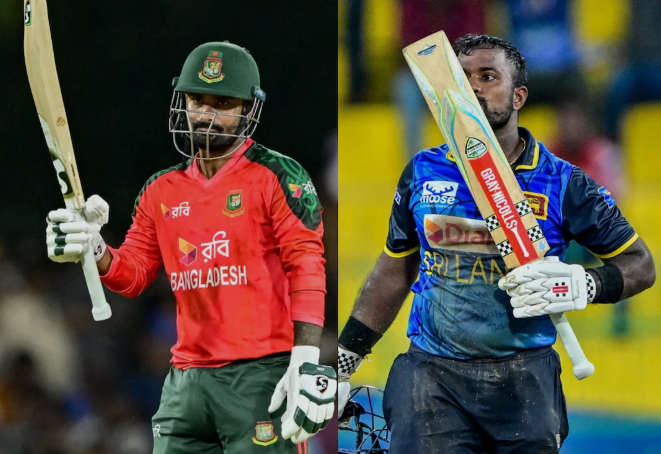
The timeline between these two Asian cricket sides reflects a journey of contrast, growth, and shifting dominance across different eras of international cricket. What began as a mismatch slowly transformed into a competitive rivalry shaped by evolving skills, tactical maturity, and rising confidence. Early encounters were defined by experience gaps, where one side consistently controlled proceedings through superior batting depth and disciplined bowling. Over time, the emerging team adapted, learned, and rebuilt its approach, turning once one sided contests into closely fought battles. This progression makes the rivalry a fascinating study of development, resilience, and changing cricketing identity across formats.
Recent Matches Table
Date
Format
Venue
Winner
Margin
20 Sep 2025
T20I
Dubai
Bangladesh
4 wickets
13 Sep 2025
T20I
Abu Dhabi
Sri Lanka
6 wickets
16 Jul 2025
T20I
Colombo
Bangladesh
8 wickets
13 Jul 2025
T20I
Dambulla
Bangladesh
8 wickets
10 Jul 2025
T20I
Pallekele
Sri Lanka
7 wickets
08 Jul 2025
ODI
Pallekele
Sri Lanka
99 runs
05 Jul 2025
ODI
Colombo
Bangladesh
16 runs
Team Statistics Summary Table
Format
Total Matches
Sri Lanka Wins
Bangladesh Wins
No Result
Tied
Test Matches
26
19
1
6
0
One Day Internationals
60
45
13
2
0
T20 Internationals
22
13
9
0
0
ICC World Cup (ODI)
5
3
1
1
0
ICC World Cup (T20)
3
2
1
0
0
Asia Cup (All Formats)
17
12
5
0
0
Total Overall Matches
108
77
23
8
0
Individual Batting Records Table
Player Name
Team
Matches
Total Runs
Highest Score
Batting Average
Kumar Sangakkara
Sri Lanka
49
2715
319
55.40
Mushfiqur Rahim
Bangladesh
62
2108
200
36.34
Mahela Jayawardene
Sri Lanka
42
1945
203
51.18
Tamim Iqbal
Bangladesh
46
1856
127
34.37
Shakib Al Hasan
Bangladesh
51
1684
144
33.01
Tillakaratne Dilshan
Sri Lanka
38
1422
161
43.09
Kusal Mendis
Sri Lanka
35
1318
196
39.93
Individual Bowling Records Table
Player Name
Team
Matches
Total Wickets
Best Bowling
Economy Rate
Muttiah Muralitharan
Sri Lanka
31
91
6 for 18
3.42
Shakib Al Hasan
Bangladesh
51
68
5 for 47
4.15
Rangana Herath
Sri Lanka
18
56
7 for 89
3.01
Lasith Malinga
Sri Lanka
28
48
5 for 28
4.98
Mashrafe Mortaza
Bangladesh
36
42
4 for 41
5.08
Mustafizur Rahman
Bangladesh
29
39
4 for 27
5.12
Dilruwan Perera
Sri Lanka
11
35
5 for 48
3.24
Early Foundations of Competitive Asian Cricket
The early meetings between these two international sides reflected a clear difference in experience and confidence. One team entered the field with established global success, while the other was still building its identity in top level cricket. These matches were less about rivalry at the start and more about learning, adaptation, and exposure to higher standards of play. The stronger side relied on disciplined bowling and stable batting order, while the emerging team struggled to convert starts into meaningful totals. Despite one sided results, there were moments where individual performances showed potential for future growth. Fielding standards, match awareness, and pressure handling were key differences during this phase. Over time, the gap in execution slowly began to narrow as the developing team gained exposure and confidence from repeated encounters against experienced opposition.
Match Type
Dominant Side
Key Factor
Margin Style
ODI
Experienced team
Batting depth
Large wins
Test
Experienced team
Spin control
Innings wins
ODI
Experienced team
Top order stability
Comfortable chase
Limited Overs
Experienced team
Death bowling
Controlled victory
Initial International Clashes and Learning Curve
As meetings continued, the emerging side began to understand the intensity required at the international level. Early matches were marked by collapses under pressure, especially when facing disciplined bowling attacks. The opposition consistently applied scoreboard pressure through steady partnerships and controlled run rates. However, these encounters also provided valuable lessons in shot selection, strike rotation, and patience at the crease. Bowlers from the developing team started experimenting with variations, even though consistency was still missing. Field placements and tactical awareness gradually improved as players adapted to higher competition standards. While results still favored the more experienced team, the margin of dominance began to show slight reduction in certain matches. These early encounters laid the foundation for a more balanced future competition as players matured through repeated exposure.
Match Format
Winning Side
Key Learning Area
Performance Gap
ODI
Stronger side
Batting stability
High
Test
Stronger side
Spin adaptation
Medium
ODI
Stronger side
Pressure handling
Medium
T20
Stronger side
Death overs
High
Era of Clear Dominance and Control
During this period, one team maintained clear control over most encounters. Their experienced batters consistently built strong totals, while their bowlers exploited weaknesses in the opposition lineup. Matches often followed a predictable pattern where early wickets created pressure that was difficult to recover from. The fielding unit also played a crucial role by saving runs and creating wicket opportunities. On the other hand, the developing side showed flashes of resistance but lacked the consistency required to challenge strong totals. Many games ended with comfortable margins, reflecting the difference in skill level and match temperament. However, even in dominance, small improvements could be observed in defensive batting and bowling discipline from the weaker side. This phase became a reference point for measuring progress in later years.
Format
Winning Trend
Key Strength
Opposition Weakness
ODI
One sided
Top order batting
Middle order collapse
Test
One sided
Spin attack
Defensive batting
ODI
One sided
Fielding pressure
Low strike rotation
T20
One sided
Power hitting
Death over leaks
Rise of Competitive Resistance and Confidence
As time progressed, the emerging team started showing stronger resistance in both home and away conditions. Batters began building longer partnerships, and bowlers improved their ability to contain runs during middle overs. This shift was not immediate but developed through consistent exposure to high level competition. Matches that were once one sided started becoming competitive, especially in limited overs formats. Strategic improvements such as better rotation of strike and controlled aggression became visible. The experienced side still held an advantage, but the gap was no longer as wide as before. Pressure situations started producing closer finishes, and confidence within the developing squad increased significantly. This phase marked the beginning of a more balanced competitive environment.
Format
Competitive Level
Key Improvement
Match Outcome Trend
ODI
Rising
Batting partnerships
Narrow losses
T20
Rising
Bowling control
Close finishes
ODI
Moderate
Strike rotation
Mixed results
Test
Low to moderate
Defensive play
Longer sessions
Turning Points and Momentum Shifts
Certain matches in this timeline became turning points that changed the perception of competitiveness. These games featured strong chasing performances, unexpected collapses, and standout individual brilliance. The emerging team began to believe in their ability to challenge stronger opponents, especially in pressure situations. Tactical changes such as aggressive field placements and spin heavy strategies played an important role in shifting momentum. The experienced side also faced challenges adapting to changing conditions and improved opposition planning. These matches did not completely reverse dominance but created a psychological shift in how both teams approached future encounters. The rivalry became more engaging as results became less predictable.
Match Scenario
Key Moment
Impact
Result Type
ODI chase
Late partnership
Momentum shift
Close win
T20 finish
Final over drama
Pressure rise
Narrow result
ODI collapse
Middle order failure
Unexpected turn
Surprise outcome
Test session
Spin dominance
Control shift
Draw possibility
Modern Evolution and Tactical Intelligence
In modern cricket, both teams have evolved significantly in terms of strategy and execution. Data analysis, match planning, and role specialization have become central to performance. The emerging side now relies on structured batting orders and spin friendly attack plans, while the experienced side focuses on rebuilding consistency through young talent integration. Matches are now more tactical, with small decisions often deciding outcomes. Fielding standards have improved dramatically on both sides, and fitness levels are much closer compared to earlier eras. This phase reflects a more professional and balanced competitive environment where both teams can win depending on conditions and execution.
Modern Factor
Team Focus
Strength Area
Outcome Influence
Analytics
Both teams
Strategy planning
High
Fitness
Both teams
Fielding quality
Medium
Batting depth
Emerging team
Stability
High
Bowling variety
Experienced team
Control
High
Recent Encounters and Psychological Balance
In recent years, matches between these sides have become far more balanced and unpredictable. Both teams have registered wins in different formats, showing that the gap has narrowed significantly. Pressure situations now bring out both strong performances and occasional collapses, depending on conditions. Crowd energy and regional familiarity still play a major role, especially in subcontinental venues. The psychological aspect of the game has become more important than ever, with players aware that small mistakes can change outcomes. This modern phase reflects maturity, adaptability, and a true competitive spirit between two well matched international sides.
Recent Aspect
Observation
Key Factor
Result Pattern
ODI matches
Balanced
Pressure handling
Alternating wins
T20 matches
Tight contests
Finishing ability
Unpredictable
Home games
Advantage shifts
Conditions
Split results
Player form
Critical
Consistency
Match deciding
Conclusion
The complete timeline of encounters highlights how cricketing balance can evolve through persistence, learning, and strategic improvement. From early dominance by a more experienced side to modern day competitive clashes, the rivalry now stands on far more equal footing. Both teams have contributed memorable performances, tactical innovations, and match defining moments that shaped their cricketing journeys. While historical records still reflect phases of control, recent years show a clear narrowing of the gap. This rivalry continues to grow as both sides refine their strengths, making future encounters unpredictable, intense, and highly engaging for cricket fans worldwide.