Table of Contents
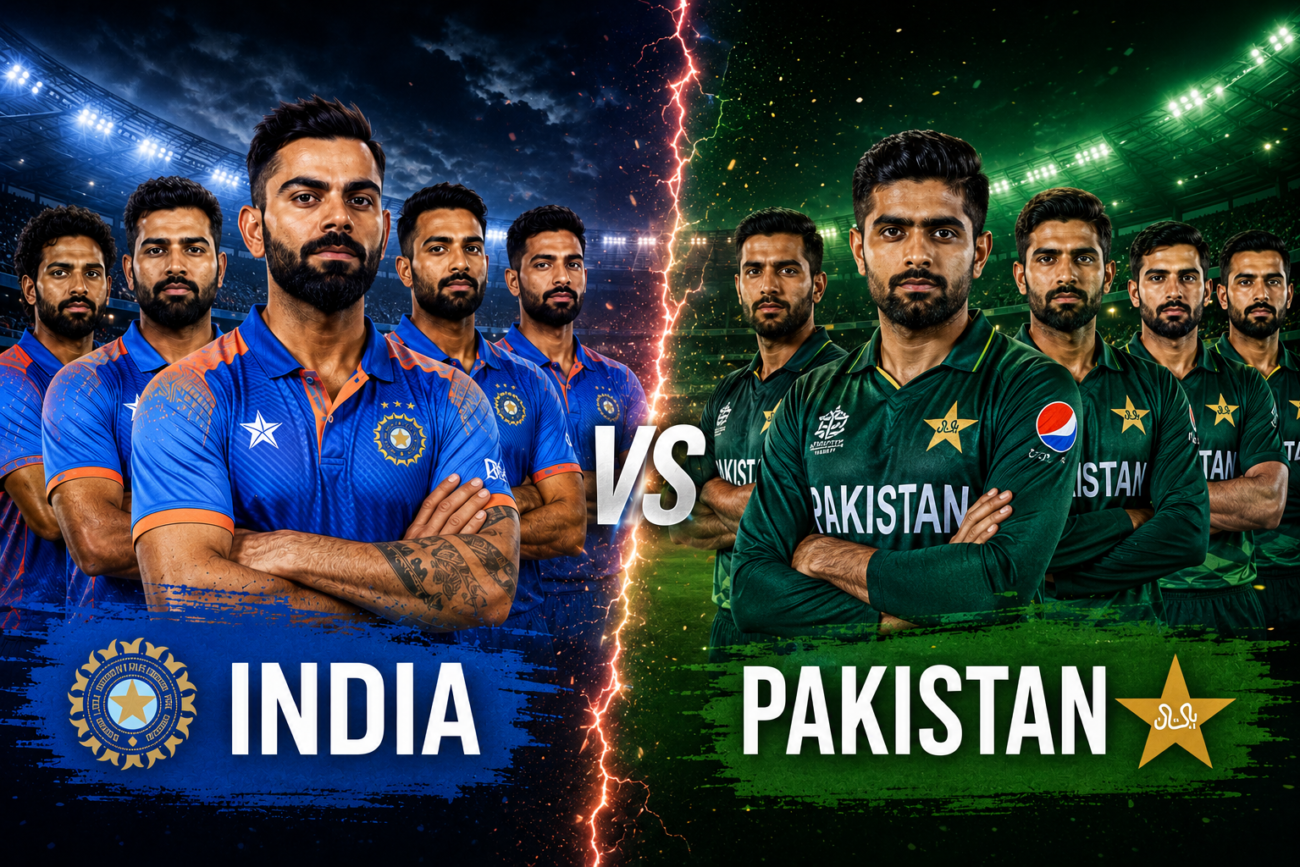
Few sporting rivalries generate emotions comparable to India National Cricket Team Vs Pakistan National Cricket Team Matches. More than a contest between bat and ball, these encounters represent history, national pride, sporting excellence, and extraordinary pressure. Whenever India and Pakistan share a cricket field, millions stop what they are doing to watch. Television records are broken, stadiums become electric, and players find themselves under scrutiny unlike any other contest in world cricket. Across decades, this rivalry has produced legendary performances, unforgettable finishes, and moments that have become part of cricket folklore.
How the Rivalry Began and Why It Became Unique
The story began shortly after the partition of the Indian subcontinent. Pakistan played its first Test series against India in 1952, creating a sporting relationship that would evolve into cricket’s most discussed rivalry.
Unlike many international rivalries built solely on competition, India and Pakistan matches developed within a broader historical context. Every series attracted enormous public attention. Victories carried emotional significance far beyond points or trophies.
During the early decades, bilateral series were frequent. Fans witnessed extended battles featuring legendary cricketers from both nations. Over time, political realities reduced bilateral cricket, making every meeting rarer and more valuable.
| Milestone | Year | Significance |
| First Test Match | 1952 | Pakistan’s first Test against India |
| First ODI Meeting | 1978 | Beginning of limited-overs rivalry |
| First World Cup Meeting | 1992 | Start of World Cup encounters |
| First T20 World Cup Meeting | 2007 | Birth of T20 rivalry |
| Champions Trophy Final | 2017 | Pakistan’s biggest ICC win over India |
The reduced frequency of bilateral contests has increased anticipation. Unlike rivalries where teams meet several times annually, India and Pakistan often face each other mainly during ICC tournaments and continental competitions.
This scarcity has made every match feel like a major event.
India National Cricket Team Vs Pakistan National Cricket Team Matches Head-to-Head Record
Statistics tell only part of the story, but they reveal how closely contested this rivalry has been across formats.
Overall International Head-to-Head
| Format | Matches | India Wins | Pakistan Wins | Draw/Tie/NR |
| Tests | 59 | 9 | 12 | 38 |
| ODIs | 135+ | 57+ | 73+ | Remaining NR/Tie |
| T20Is | 13+ | 10+ | 3+ | 0 |
| Total | 200+ | Significant | Significant | Several |
Pakistan dominated many early ODI contests, particularly during the 1980s and 1990s. India has enjoyed greater success in T20 internationals and ICC events during the modern era.
These numbers highlight how the rivalry has evolved rather than remaining static. Different generations have experienced different periods of dominance.
The Era of Imran Khan, Kapil Dev, and Cricket’s Rising Popularity
The 1980s transformed the rivalry into a global spectacle. Television coverage expanded, allowing millions to follow matches live.
For Pakistan, players like Imran Khan, Javed Miandad, and Wasim Akram became household names.
India responded with icons such as Kapil Dev, Sunil Gavaskar, and later Mohammad Azharuddin.
One of the most remembered moments came in 1986 when Javed Miandad struck a last-ball six in Sharjah. That single shot became one of the defining images of cricket rivalry history.
| Iconic 1980s Moment | Result |
| Sharjah Final 1986 | Pakistan won |
| Austral-Asia Cup Final | Miandad’s last-ball six |
| Multiple Bilateral Series | Closely contested |
| Rise of Television Coverage | Massive audience growth |
The importance of these matches extended beyond trophies. They helped transform cricket into a cultural phenomenon across South Asia.
Sachin Tendulkar and the Golden Age of India-Pakistan Cricket
The 1990s and early 2000s are often considered the golden era of India-Pakistan contests.
The emergence of Sachin Tendulkar added another layer to the rivalry. Pakistani fans admired his talent even while hoping their bowlers would dismiss him quickly.
On the other side stood a formidable bowling attack featuring Waqar Younis, Wasim Akram, and later Shoaib Akhtar.
Their battles became must-watch events.
| Famous Individual Rivalries | Era |
| Tendulkar vs Akram | 1990s |
| Tendulkar vs Waqar | 1990s |
| Tendulkar vs Shoaib | 2000s |
| Dravid vs Pakistan Pace Attack | 1990s-2000s |
| Inzamam vs Indian Spinners | 1990s-2000s |
Fans still remember Tendulkar’s fearless strokeplay against world-class pace bowling. These contests elevated individual performances into historical milestones.
The rivalry was no longer just team versus team. It became a stage where cricket’s biggest stars built their legacies.
World Cup Meetings That Changed Cricket History
No statistic is cited more often than India’s dominance over Pakistan in Cricket World Cups.
For decades, Pakistan struggled to defeat India on the World Cup stage despite fielding world-class teams.
Memorable World Cup Encounters
| Tournament | Winner | Notable Moment |
| 1992 World Cup | India | First World Cup meeting |
| 1996 World Cup | India | Bangalore quarter-final |
| 1999 World Cup | India | Tendulkar tribute innings |
| 2003 World Cup | India | Tendulkar’s 98 |
| 2011 World Cup | India | Semi-final victory |
| 2015 World Cup | India | Kohli century |
| 2019 World Cup | India | Rohit Sharma hundred |
| 2023 World Cup | India | Dominant chase |
The 2003 clash remains particularly special. Sachin Tendulkar’s assault on Pakistan’s pace attack, especially the famous upper cut against Shoaib Akhtar, remains one of cricket’s most replayed moments.
World Cup victories carry additional significance because they occur under immense pressure and attract massive global audiences.
The T20 Revolution and New Heroes
The arrival of T20 cricket introduced fresh drama into the rivalry.
The inaugural ICC World Twenty20 in 2007 produced two unforgettable India-Pakistan contests. The group-stage tie was decided through a bowl-out, while the final delivered one of the most dramatic endings in cricket history.
India emerged victorious in the final, helping establish T20 cricket’s popularity worldwide.
| Major T20 Rivalry Moments | Result |
| T20 World Cup 2007 Group Match | India won bowl-out |
| T20 World Cup 2007 Final | India won |
| T20 World Cup 2012 | India won |
| T20 World Cup 2021 | Pakistan won |
| T20 World Cup 2022 | India won |
The 2022 encounter in Melbourne became another classic. Virat Kohli produced a remarkable innings under immense pressure, guiding India to an unforgettable victory.
Many analysts consider it one of the greatest T20 innings ever played.
The Greatest Players to Shape the Rivalry
Every era has produced stars who elevated the contest.
Leading Indian Icons
| Player | Contribution |
| Sachin Tendulkar | Match-winning performances |
| Virat Kohli | Modern ICC dominance |
| Rahul Dravid | Stability under pressure |
| MS Dhoni | Leadership and finishing |
| Rohit Sharma | Big-match hundreds |
Leading Pakistani Icons
| Player | Contribution |
| Imran Khan | Inspirational leadership |
| Wasim Akram | World-class swing bowling |
| Waqar Younis | Reverse swing master |
| Inzamam-ul-Haq | Consistent batting |
| Babar Azam | Modern batting excellence |
What separates these players from others is their ability to perform under extraordinary pressure. A century or five-wicket haul against a strong opponent is impressive. Doing so in an India-Pakistan match often becomes career-defining.
Why India-Pakistan Matches Generate Unmatched Global Interest
Several sporting rivalries attract huge audiences, but India versus Pakistan consistently ranks among the most watched events in world sport.
The reasons are straightforward:
- Massive fan bases in both countries.
- Global South Asian diaspora.
- Historical significance.
- Scarcity of matches.
- Presence of elite players.
- High-pressure tournament encounters.
Broadcast figures frequently rival or surpass those of major global sporting events.
Even neutral cricket fans often tune in because the atmosphere feels different. Every run, wicket, and fielding effort appears magnified.
The emotional investment of supporters creates an environment few sporting contests can replicate.
Modern Trends and the Future of the Rivalry
Today’s rivalry differs significantly from earlier decades.
Bilateral cricket has become rare, meaning ICC tournaments and Asian events carry greater importance. Players no longer face each other dozens of times across extended series.
This has changed preparation strategies. Teams often analyze opponents through video data rather than repeated direct competition.
The rise of franchise cricket has also altered relationships. Many players interact professionally outside international matches, reducing hostility while preserving competitiveness.
| Then vs Now | Earlier Era | Modern Era |
| Bilateral Series | Frequent | Rare |
| Match Exposure | High | Limited |
| Analysis Tools | Basic | Advanced |
| Media Coverage | Traditional | Digital & Social |
| Global Reach | Regional | Worldwide |
Despite these changes, the fundamental attraction remains unchanged. Fans still circle India-Pakistan fixtures on their calendars months in advance.
Records and Milestones That Define the Rivalry
Several achievements stand out across generations.
| Record Category | Achievement |
| Highest Individual ODI Score | Saeed Anwar’s 194 |
| Most Famous ODI Innings | Tendulkar’s 98 in 2003 WC |
| Historic T20 Knock | Kohli’s Melbourne masterclass |
| Legendary Bowling Figure | Multiple Akram match-winning spells |
| Most Emotional Match | 2011 World Cup Semi-Final |
Records matter because they help explain eras.
Saeed Anwar’s 194 represented batting excellence ahead of its time. Tendulkar’s 2003 innings symbolized fearless cricket. Kohli’s Melbourne performance illustrated modern T20 brilliance.
Each achievement reflects the standards required to succeed in cricket’s most demanding rivalry.
Conclusion
The history of India National Cricket Team Vs Pakistan National Cricket Team Matches extends far beyond scorecards and statistics. It is a story of extraordinary cricketers, unforgettable pressure moments, evolving generations, and a rivalry that continues to captivate audiences worldwide. From the first Test match in 1952 to modern ICC tournament classics, every chapter has added new drama and significance. While formats, players, and strategies continue to evolve, the excitement surrounding India National Cricket Team Vs Pakistan National Cricket Team Matches remains unmatched. Few contests in world sport combine history, skill, passion, and expectation as powerfully as this iconic cricket rivalry.
FAQs
Why is the India vs Pakistan cricket rivalry considered the biggest in cricket?
The rivalry combines sporting excellence with historical significance, enormous fan bases, and decades of memorable encounters. Unlike many international rivalries, India and Pakistan matches attract attention from hundreds of millions of viewers worldwide. The emotional investment from supporters, combined with the scarcity of matches in modern cricket, creates unmatched anticipation. Every contest carries enormous pressure, making performances more memorable and often career-defining for players on both sides.
Which team has been more successful in ICC tournaments?
India has generally enjoyed greater success against Pakistan in ICC World Cups and several major ICC events. World Cup meetings, in particular, have often favored India. However, Pakistan has produced important victories of its own, including memorable Champions Trophy performances. While overall ICC records may lean toward India, Pakistan has consistently fielded competitive teams capable of producing outstanding performances on cricket’s biggest stages.
What is the most famous India-Pakistan cricket match?
Many experts consider the 2003 World Cup match among the most iconic due to Sachin Tendulkar’s remarkable innings. Others point to the 2007 T20 World Cup Final, the 2011 World Cup Semi-Final, or the 2022 T20 World Cup thriller in Melbourne. Each of these matches carried immense pressure and delivered unforgettable moments that remain deeply embedded in cricket history.
Who are the greatest players in the rivalry’s history?
The list includes Sachin Tendulkar, Virat Kohli, Kapil Dev, MS Dhoni, Imran Khan, Wasim Akram, Waqar Younis, Javed Miandad, Inzamam-ul-Haq, and several others. These players succeeded against elite opposition while handling extraordinary expectations. Their performances shaped entire eras and contributed significantly to the rivalry’s enduring appeal.
Why do India and Pakistan play fewer bilateral series today?
Political and diplomatic circumstances have reduced bilateral cricket opportunities between the two nations. As a result, most meetings now occur during ICC tournaments and Asian competitions. This rarity has increased the value of each encounter, making every match a major global event that attracts extensive media coverage and fan attention.
How has T20 cricket changed the rivalry?
T20 cricket has made the rivalry faster, more unpredictable, and accessible to younger audiences. Matches often hinge on a few overs rather than multi-day battles. Dramatic finishes, aggressive batting, and strategic innovations have added fresh dimensions to the contest while preserving the intense atmosphere that defines India-Pakistan cricket.