Table of Contents
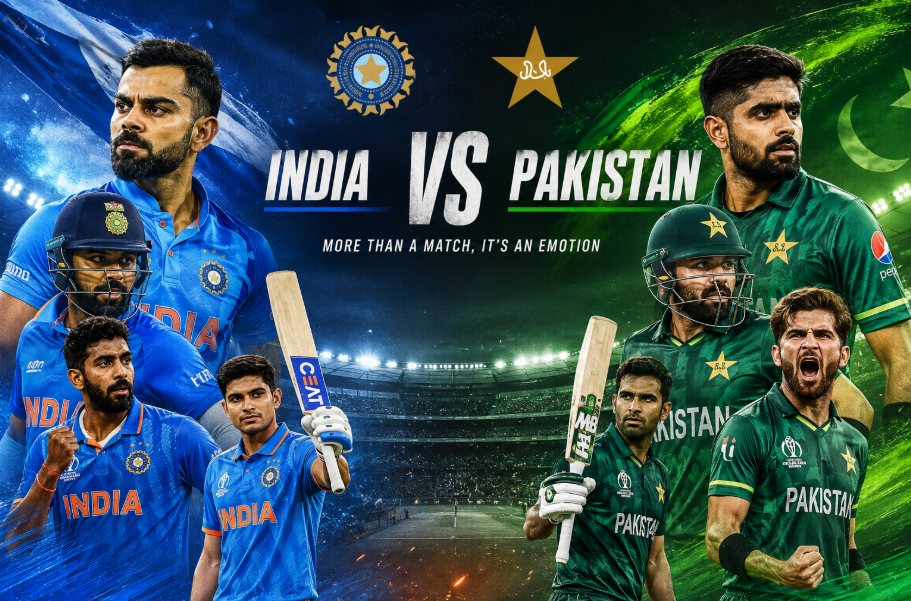
The rivalry between India and Pakistan is more than cricket, it is emotion, pressure, and history rolled into every ball bowled between the two sides. Since their earliest encounters, the India National Cricket Team Vs Pakistan National Cricket Team Players battles have created unforgettable scorecards filled with drama, tension, and moments that define careers. From low scoring spin duels in the early years to high voltage ICC knockout clashes, this rivalry has evolved into the biggest spectacle in world cricket. Fans from both nations treat every match as a final, where pride matters as much as performance on the field.
Head-To-Head Summary
| Format | Total Matches Played | India Won | Pakistan Won | Tied / No Result |
|---|---|---|---|---|
| Test Matches | 59 | 9 | 12 | 38 |
| One-Day Internationals (ODI) | 136 | 58 | 73 | 5 |
| T20 Internationals (T20I) | 17 | 14 | 3 | 0 |
| Total (All Formats) | 212 | 81 | 88 | 43 |
Recent Matches
| Date | Format | Tournament / Event | Venue | Winner & Margin |
|---|---|---|---|---|
| 15 February 2026 | T20I | ICC Men’s T20 World Cup | Colombo, Sri Lanka | India won by 61 runs |
| 23 February 2025 | ODI | ICC Champions Trophy | Dubai, UAE | India won by 6 wickets |
| 9 June 2024 | T20I | ICC Men’s T20 World Cup | New York, USA | India won by 6 runs |
| 14 October 2023 | ODI | ICC Cricket World Cup | Ahmedabad, India | India won by 7 wickets |
| 10–11 Sept 2023 | ODI | Asia Cup | Colombo, Sri Lanka | India won by 228 runs |
Top Run Scorers
| Player | Team | Span | Total Runs |
|---|---|---|---|
| Sachin Tendulkar | India | 1989–2012 | 2,526 |
| Javed Miandad | Pakistan | 1978–1996 | 2,228 |
| Inzamam-ul-Haq | Pakistan | 1992–2006 | 1,525 |
| Rahul Dravid | India | 1996–2009 | 1,257 |
T20I Format Leaders
| Player | Team | Total Runs | Top Score |
|---|---|---|---|
| Virat Kohli | India | 492 | 82 |
| Mohammad Rizwan | Pakistan | 323 | 79 |
| Mohammad Babar Azam | Pakistan | 178 | 68 |
| Shoaib Malik | Pakistan | 164 | 57 |
Top Wicket Takers
| Bowler | Team | Span | Total Wickets |
|---|---|---|---|
| Kapil Dev | India | 1978–1992 | 99 |
| Anil Kumble | India | 1990–2007 | 94 |
| Imran Khan | Pakistan | 1978–1992 | 65 |
| Wasim Akram | Pakistan | 1985–2003 | 60 |
Modern T20I Leaders
| Bowler | Team | Format | Total Wickets |
|---|---|---|---|
| Hardik Pandya | India | T20I | 15 |
| Kuldeep Yadav | India | T20I | 13 |
| Bhuvneshwar Kumar | India | T20I | 11 |
| Shaheen Shah Afridi | Pakistan | T20I | 9 |
Recent Teams
| India National Cricket Team | Pakistan National Cricket Team |
|---|---|
| Abhishek Sharma (Opener) | Saim Ayub (Opener) |
| Ishan Kishan (Wicketkeeper-Batter) | Sahibzada Farhan (Opener) |
| Tilak Varma (Top-order Batter) | Salman Ali Agha (All-Rounder) |
| Suryakumar Yadav (Middle-order Batter) | Babar Azam (Batter / Captain) |
| Hardik Pandya (All-Rounder) | Usman Khan (Middle-order Batter) |
| Shivam Dube (All-Rounder) | Shadab Khan (All-Rounder) |
| Rinku Singh (Batter / Finisher) | Mohammad Nawaz (All-Rounder) |
| Axar Patel (Spin Bowler) | Faheem Ashraf (Bowling All-Rounder) |
| Kuldeep Yadav (Spin Bowler) | Shaheen Shah Afridi (Fast Bowler) |
| Varun Chakaravarthy (Spin Bowler) | Abrar Ahmed (Spin Bowler) |
| Jasprit Bumrah (Fast Bowler) | Usman Tariq (Bowler) |
The Birth of a Cricketing War: First Ever India vs Pakistan Clash
The first encounters between India and Pakistan were never just about runs and wickets, they were about identity, pride, and emotional intensity that stretched far beyond the boundary ropes. When these two sides first met in the early years after partition, every delivery carried political undertones and every boundary echoed in two different nations with contrasting emotions. The players were not just cricketers; they were ambassadors of pressure.
The early matches were cautious, low scoring, and heavily influenced by quality spin and disciplined bowling attacks. Batsmen from both sides struggled to dominate as nerves often outweighed skill. Yet, these games laid the foundation of what would become cricket’s most emotionally charged rivalry.
The crowd atmosphere was electric even in neutral venues, and every small mistake became a turning point in national conversations. This era defined respect mixed with rivalry, setting the tone for decades of unforgettable cricket battles.
| Score | Winning | Performance | Season | Useful Info |
|---|---|---|---|---|
| Low scoring tight matches | Mixed results | Defensive batting, spin dominance | 1950s–1960s | First bilateral meetings |
| Close finishes | Even contests | Emerging fast bowlers | Early ODI era | Political tension high |
| Moderate totals | Slight edge fluctuating | Fielding improvement | Late 1960s | Growing fan pressure |
| Balanced scorecards | No clear dominance | Tactical cricket focus | Transition phase | Rivalry foundation built |
Early Encounters and Growing Intensity in the 1970s and 1980s
The 1970s and 1980s marked a turning point where the rivalry transformed from cautious respect into competitive aggression. Both teams began producing world-class players who could change matches single-handedly. India relied heavily on spin magic and technically sound batting, while Pakistan introduced the world to unpredictable pace attacks that could dismantle any lineup on their day.
Matches during this period became more structured, with clearer strategies and rising crowd expectations. The emergence of legendary bowlers and batsmen added new layers of drama. Every series felt like a test of patience and mental strength rather than just skill.
This era also saw the rise of iconic match-winning performances that are still remembered today. Momentum swung frequently between the two sides, making every encounter unpredictable and emotionally charged.
| Score | Winning | Performance | Season | Useful Info |
|---|---|---|---|---|
| Competitive totals | Alternating wins | Fast bowling rise | 1970s | Imran vs Indian batting battles |
| Medium-high scores | Pakistan slight edge | Reverse swing emergence | Early 1980s | Tactical evolution |
| Tight ODI finishes | India comeback wins | Spin control impact | Mid 1980s | Rising TV audiences |
| High pressure games | Even split | Balanced squads | Late 1980s | Rivalry global attention |
The 1990s Era When Pressure Turned Into Passion
The 1990s changed everything about this rivalry. Cricket had become global, television brought the intensity into living rooms, and the India vs Pakistan clashes turned into national events. Pressure was no longer just on the players, it was on entire countries watching every ball.
This decade saw the rise of iconic players who defined the rivalry with unforgettable performances. Batting became more aggressive, bowling attacks more strategic, and fielding standards significantly improved. World Cup encounters added another layer of drama where elimination stakes turned every match into a do-or-die battle.
The emotional intensity peaked during this era as fans began treating these matches like finals regardless of tournament stage. The rivalry now had heroes, villains, and moments that would be replayed for decades.
| Score | Winning | Performance | Season | Useful Info |
|---|---|---|---|---|
| High pressure totals | India and Pakistan shared wins | Batting dominance increases | Early 1990s | World Cup clashes begin |
| Competitive chases | India strong performances | Improved strike rates | Mid 1990s | TV era expansion |
| Narrow finishes | Balanced outcomes | Bowling under pressure | Late 1990s | Iconic player emergence |
| Emotional thrillers | Split results | Tactical aggression | Entire decade | Global audience growth |
The 2003 World Cup Showdown A Defining Scorecard Moment
The 2003 World Cup clash between India and Pakistan remains one of the most iconic matches in cricket history. The pressure was immense as both teams entered the contest with high expectations. Pakistan set a competitive target, but India responded with a composed and dominant chase that silenced critics and thrilled millions.
The match highlighted the brilliance of top order batting and the importance of handling pressure in knockout-style group games. Pakistan’s bowling attack tried to apply early pressure, but India’s strategy of controlled aggression paid off.
This game also showed how momentum can shift in a rivalry within a single innings. Every boundary reduced tension, while every wicket briefly revived it. The final scorecard became a symbol of dominance in a high-stakes environment.
| Score | Winning | Performance | Season | Useful Info |
|---|---|---|---|---|
| Pakistan 250+ target | India won convincingly | Strong opening partnership | 2003 | World Cup group match |
| Competitive chase | India dominant | Top order stability | 2003 | Pressure handling masterclass |
| Bowling battle | India slight edge | Controlled pace attack | 2003 | Historic rivalry game |
| One-sided finish | India victory | Efficient chase strategy | 2003 | Iconic global viewership |
The 2007 T20 World Cup Final A Rivalry Rewritten in One Night
The 2007 T20 World Cup final between India and Pakistan was not just a match, it was the birth of a new cricketing era. Every moment felt unpredictable as momentum shifted constantly between the two sides. India posted a fighting total, but Pakistan responded strongly, setting up a tense finish.
The game is remembered for its nerve-wracking final overs, fielding pressure, and moments of brilliance under extreme tension. Young players stepped up, proving that temperament mattered as much as talent in short-format cricket.
The final over became one of the most discussed moments in cricket history, with emotions swinging rapidly across both fanbases. India eventually emerged victorious, but the match defined T20 cricket as a format built for drama.
| Score | Winning | Performance | Season | Useful Info |
|---|---|---|---|---|
| India 150+ score | India won final | Balanced batting effort | 2007 | T20 World Cup final |
| Pakistan strong chase | Narrow loss | Middle order resistance | 2007 | High pressure finish |
| Tight bowling spells | India edge | Death overs pressure | 2007 | Historic final over |
| Close finish | India victory | Fielding impact decisive | 2007 | Birth of T20 rivalry fame |
The 2011 World Cup Semi Final Pressure Politics and Pure Cricket
The 2011 World Cup semi final between India and Pakistan is remembered as one of the most emotionally charged matches in cricket history. The stakes were enormous, with a place in the final on the line and millions watching across both nations.
India built their innings through disciplined batting partnerships, while Pakistan fought back with disciplined bowling spells. However, India’s ability to maintain composure under pressure proved decisive. The match had everything: tension, strategy, and moments where a single over could have changed history.
Beyond cricket, the atmosphere reflected national pride and emotional intensity. Players had to block out noise from outside the ground and focus purely on execution. India’s eventual victory was celebrated as a historic achievement.
| Score | Winning | Performance | Season | Useful Info |
|---|---|---|---|---|
| India 260+ total | India won semi final | Strong partnerships | 2011 | World Cup knockout |
| Pakistan competitive innings | India victory | Bowling discipline tested | 2011 | High pressure semi final |
| Tight middle overs | India edge | Spin control crucial | 2011 | Tactical masterclass |
| Emotional finish | India won | Calm chase execution | 2011 | Historic rivalry milestone |
Conclusion
The journey of India National Cricket Team Vs Pakistan National Cricket Team Players has shaped modern cricket storytelling like no other rivalry in the world. Across decades, the scorecards have told stories of dominance, heartbreak, redemption, and unforgettable brilliance. Whether it was the 2003 World Cup chase, the 2007 T20 final thriller, or the emotional 2011 semi final, every match added a new chapter to cricket history. Even today, this rivalry continues to inspire new generations of players and fans. It remains a symbol of intensity where skill meets emotion, and every encounter becomes part of sporting legend.