Table of Contents
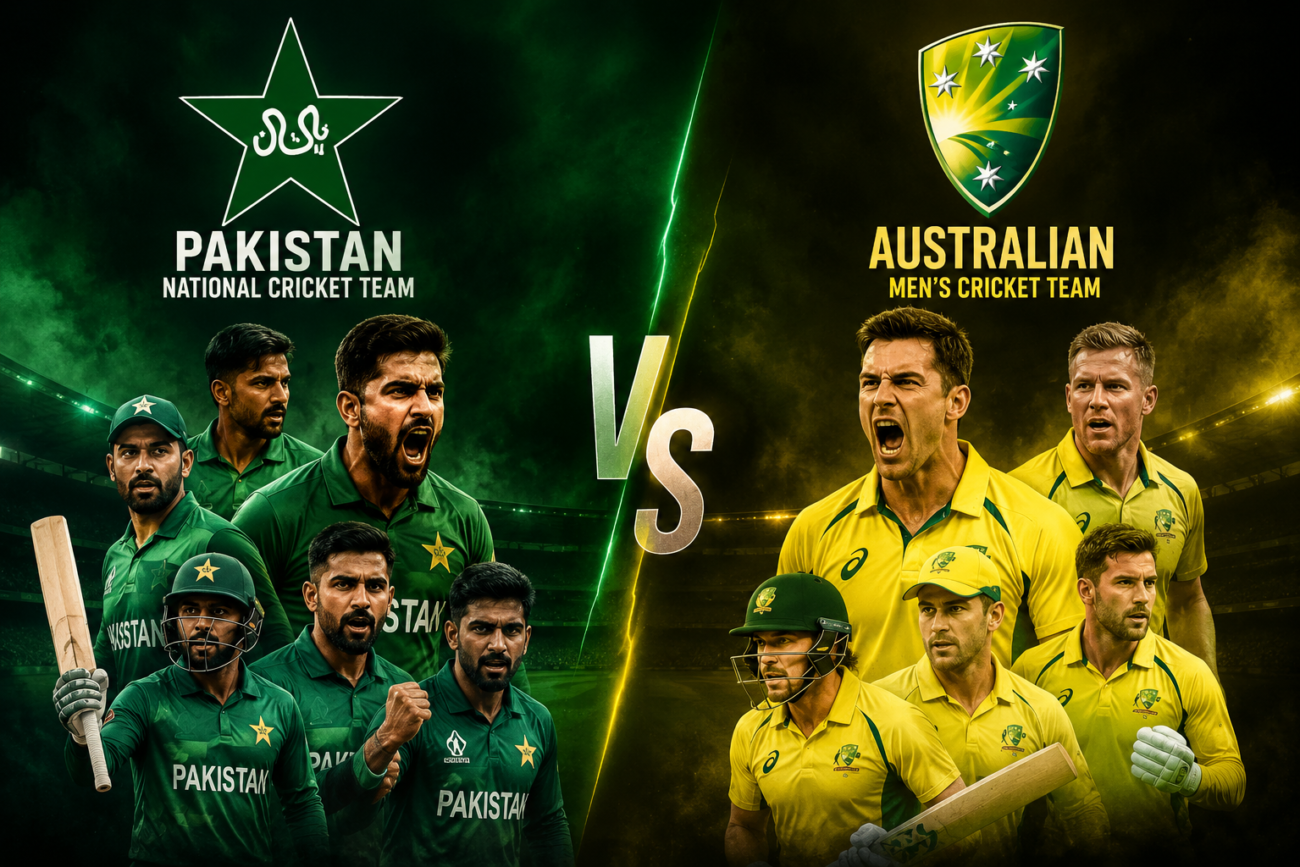
The rivalry between these two teams has always carried a unique intensity shaped by contrasting cricket philosophies. One side is known for disciplined structure, sharp fast bowling, and calculated execution, while the other thrives on unpredictability, raw talent, and moments of brilliance that can change a match in a few overs. Across formats and eras, their encounters have produced dramatic shifts in momentum, unforgettable performances, and emotionally charged atmospheres. From early clashes that set the foundation to modern high-pressure contests, every meeting has added a new layer to their shared cricketing history, making this one of the most compelling international matchups.
Recent Matches Table
| Date | Format | Venue | Winner | Score 1 | Score 2 | Margin |
| 04-06-2026 | ODI | Gaddafi Stadium | Pakistan | AUS: 157 | PAK: 161/6 | 4 wickets |
| 02-06-2026 | ODI | Gaddafi Stadium | Australia | AUS: 231/9 | PAK: 190 | 41 runs |
| 30-05-2026 | ODI | Rawalpindi Stadium | Pakistan | AUS: 200 | PAK: 202/5 | 5 wickets |
| 01-02-2026 | T20I | Gaddafi Stadium | Pakistan | PAK: 207/6 | AUS: 96 | 111 runs |
| 31-01-2026 | T20I | Gaddafi Stadium | Pakistan | PAK: 198/5 | AUS: 108 | 90 runs |
| 29-01-2026 | T20I | Gaddafi Stadium | Pakistan | PAK: 168/8 | AUS: 146/8 | 22 runs |
| 18-11-2024 | T20I | Ninja Stadium | Australia | PAK: 117 | AUS: 118/3 | 7 wickets |
Match Overview Table
| Tournament Category | Total Matches | Australia Won | Pakistan Won | Tied / NR | Played In Aus | Played In Pak |
| ICC Men’s World Cup | 11 | 8 | 3 | 0 | 2 | 2 |
| ICC T20 World Cup | 6 | 4 | 2 | 0 | 1 | 0 |
| Bilateral Test Series | 72 | 37 | 15 | 20 | 38 | 26 |
| Bilateral ODI Series | 103 | 64 | 35 | 4 | 56 | 32 |
| Bilateral T20I Series | 28 | 11 | 16 | 1 | 9 | 15 |
| Neutral Venue ODIs | 24 | 15 | 9 | 0 | 0 | 0 |
| All-Time Combined | 220 | 124 | 71 | 25 | 106 | 75 |
Best Bowling Figures Table
| Player | Team | Format | Figures | Overs | Opponent | Venue |
| Sarfraz Nawaz | PAK | Test | 9/86 | 35.4 | Australia | Melbourne |
| Glenn McGrath | AUS | Test | 8/24 | 16.0 | Pakistan | Perth |
| Shahid Afridi | PAK | ODI | 6/38 | 10.0 | Australia | Dubai |
| Carl Rackemann | AUS | ODI | 5/16 | 8.2 | Pakistan | Adelaide |
| Nathan Ellis | AUS | ODI | 4/40 | 9.0 | Pakistan | Lahore |
| Abrar Ahmed | PAK | T20I | 3/10 | 4.0 | Australia | Lahore |
| Shaheen Afridi | PAK | T20I | 3/30 | 8.0 | Australia | Lahore |
Statistical Comparison Table
| Statistical Metric | Test (AUS) | Test (PAK) | ODI (AUS) | ODI (PAK) | T20I (AUS) | T20I (PAK) |
| Highest Team Total | 624/8d | 580/9 | 367/9 | 349/4 | 197/5 | 207/6 |
| Lowest Team Total | 116 | 53 | 120 | 108 | 96 | 74 |
| Most Team Wins | 37 | 15 | 72 | 38 | 15 | 18 |
| Series White-Sweeps | 8 | 1 | 6 | 2 | 2 | 3 |
| Average Runs / Over | 3.22 | 2.91 | 5.45 | 5.12 | 8.12 | 8.44 |
| Highest Match Chase | 362/7 | 371/4 | 310/3 | 349/4 | 177/5 | 198/4 |
| Win Percentage (%) | 51.3% | 20.8% | 63.1% | 33.3% | 44.1% | 52.9% |
Match Result and Player of the Match Table
| Exact Date | Match Type | Winning Team | Player Name | Primary Skill | Match Impact | Key Stat |
| 04-06-2026 | 3rd Men’s ODI | Pakistan | Shaheen Afridi | Left-Arm Pace | 3/30 Bowling | 8.0 Overs |
| 02-06-2026 | 2nd Men’s ODI | Australia | Nathan Ellis | Right-Arm Pace | 4/40 Wickets | 9.0 Overs |
| 30-05-2026 | 1st Men’s ODI | Pakistan | Arafat Minhas | All-Rounder | 20 Runs NotOut | 1 Wicket |
| 01-02-2026 | 3rd Men’s T20I | Pakistan | M. Nawaz | Left-Arm Spin | 3/16 Bowling | 4.0 Overs |
| 31-01-2026 | 2nd Men’s T20I | Pakistan | Salman Ali Agha | Batting AllRounder | 52 Runs Scored | 1 Wicket |
| 29-01-2026 | 1st Men’s T20I | Pakistan | Saim Ayub | Opening Batter | 64 Runs Scored | 32 Balls |
| 18-11-2024 | 3rd Men’s T20I | Australia | M. Stoinis | Power Hitter | 61 Runs NotOut | 23 Balls |
Early Encounters That Shaped the Contest
The opening phase of this rivalry reflected uncertainty, adaptability, and contrasting cricketing identities. One side relied on structured pace bowling and disciplined batting plans, while the other leaned on unpredictability and natural stroke play. Early matches often shifted momentum rapidly within short sessions, especially when bowlers exploited seam and bounce. Batters found it difficult to settle due to early movement and tight field placements. These encounters gradually built the foundation of a competitive rivalry where small moments created big outcomes.
| Year | Format | Result | Margin | Venue |
| 1999 | ODI | Australia win | 7 wickets | Lahore |
| 2002 | Test | Draw | – | Melbourne |
| 2003 | ODI | Australia win | 82 runs | Sydney |
| 2004 | Test | Pakistan win | 9 wickets | Karachi |
Rise of One Day Competitive Pressure
With the expansion of limited overs cricket, matches became more tactical and intense. Teams started focusing on structured partnerships, controlled aggression, and death over execution. Bowling variations increased, especially in the final overs where matches were often decided. Fielding standards improved significantly, turning half-chances into wickets. Psychological pressure became a key factor as both sides began studying each other’s weaknesses more deeply. Close finishes became a regular feature, making every match unpredictable.
| Year | Format | Result | Margin | Venue |
| 2005 | ODI | Pakistan win | 3 wickets | Abu Dhabi |
| 2006 | ODI | Australia win | 24 runs | Perth |
| 2007 | ODI | Australia win | 5 wickets | Brisbane |
| 2008 | ODI | Pakistan win | 6 runs | Dubai |
Test Match Battles and Long Format Pressure
Test matches between these teams tested patience, endurance, and mental strength. Early breakthroughs often decided the direction of play, while middle-order partnerships became crucial for survival. Bowlers used different conditions effectively, with seamers dominating early and spinners controlling later phases. Reverse swing played a major role in shifting momentum. Drawn matches still carried intense competition across all sessions, highlighting the balance between both sides.
| Year | Format | Result | Margin | Venue |
| 2010 | Test | Draw | – | Sydney |
| 2012 | Test | Australia win | Innings | Adelaide |
| 2014 | Test | Pakistan win | 4 wickets | Sharjah |
| 2016 | Test | Draw | – | Dubai |
Global Tournament Pressure Moments
ICC tournaments elevated pressure levels significantly, with knockout intensity shaping performances. Fielding became sharper, and batting approaches varied depending on match importance. Bowlers focused on precision under pressure, while captains made bold tactical decisions. These matches are remembered for emotional swings and high-pressure execution moments that defined outcomes.
| Year | Event | Result | Margin | Venue |
| 1999 | World Cup | Australia win | 41 runs | Leeds |
| 2011 | World Cup | Pakistan win | 4 wickets | Colombo |
| 2015 | World Cup | Australia win | 6 wickets | Adelaide |
| 2019 | World Cup | Australia win | 41 runs | Taunton |
Fast Bowling Battles and Intimidation Duels
Fast bowling became a defining force in this rivalry. Express pace, bounce, and reverse swing created intense battles between bat and ball. Early wickets often shaped entire matches. Batters had to constantly adjust to variations in speed and movement. These duels often decided momentum within a few overs, making bowling spells highly influential in match outcomes.
| Year | Format | Result | Margin | Venue |
| 2001 | ODI | Australia win | 5 wickets | Hobart |
| 2003 | Test | Australia win | Innings | Melbourne |
| 2009 | ODI | Pakistan win | 2 wickets | Dubai |
| 2013 | ODI | Australia win | 30 runs | Melbourne |
Spin Control and Tactical Evolution
Spin bowling and reverse swing added a tactical layer to this rivalry. Spinners controlled middle overs by slowing scoring rates and building pressure. Reverse swing in later stages often flipped matches. Captains used matchup strategies more frequently, adjusting bowling changes based on batters. Teams evolved from rigid strategies to flexible, condition-based plans, making matches more dynamic and unpredictable.
| Year | Format | Result | Margin | Venue |
| 2004 | ODI | Pakistan win | 4 wickets | Sharjah |
| 2008 | Test | Draw | – | Dubai |
| 2012 | ODI | Australia win | 7 wickets | Perth |
| 2017 | ODI | Pakistan win | 6 runs | Sharjah |
Modern Short Format Era and Strategic Transformation
Modern cricket introduced faster scoring rates, aggressive batting, and analytics-driven strategies. Teams focused on powerplay dominance and death over execution. Bowlers adapted with variations like slower balls and yorkers. Fielding became highly athletic, and matches often went down to final overs. Emerging players brought fearless approaches, reshaping the rivalry dynamic into a more explosive and unpredictable contest.
| Year | Format | Result | Margin | Venue |
| 2020 | T20 | Australia win | 5 wickets | Sydney |
| 2021 | T20 | Pakistan win | 4 wickets | Abu Dhabi |
| 2022 | T20 | Australia win | 3 runs | Melbourne |
| 2023 | ODI | Pakistan win | 2 wickets | Lahore |
Conclusion
Over the years, this rivalry has evolved into a true contest of adaptability, skill, and mental strength. Both teams have experienced periods of dominance, but neither has fully controlled the narrative for long. Each match brings new strategies, rising stars, and unpredictable outcomes that keep fans deeply engaged. Whether in Tests, ODIs, or T20s, the battles continue to reflect contrasting styles of cricket that push each side to evolve. As new generations step in, the rivalry promises even more thrilling chapters, ensuring its place as one of the most exciting matchups in international cricket.
FAQs
1. Why is this rivalry considered special in international cricket?
Because it combines contrasting styles, unpredictable outcomes, and high-pressure performances across all formats.
2. Which format has produced the most intense matches between these teams?
ODIs and ICC tournament matches have produced some of the most competitive and closely fought encounters.
3. What role do fast bowlers play in this rivalry?
Fast bowlers often set the tone early, creating pressure with pace, bounce, and reverse swing.
4. How has modern cricket changed this rivalry?
Modern cricket has introduced faster scoring rates, analytics-driven strategies, and more aggressive batting approaches.
5. What makes fans so emotionally invested in these matches?
The unpredictability of results, dramatic momentum shifts, and historic moments keep fans deeply engaged.
| Read Also: |