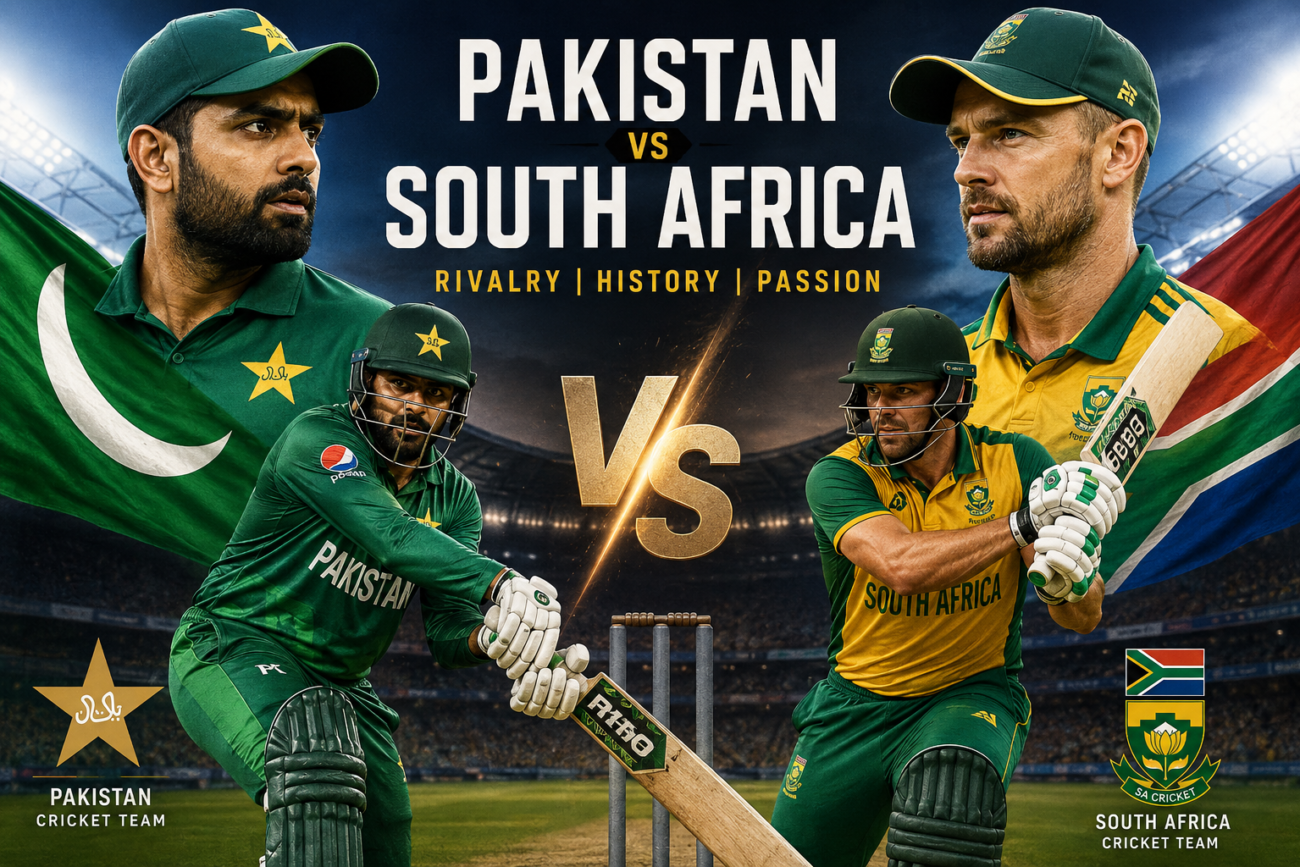
The rivalry between the Pakistan National Cricket Team and the South Africa National Cricket Team has grown into one of the most competitive matchups in modern cricket history. From their early encounters after South Africa’s return to international cricket to their latest clashes in ICC events and bilateral series, both teams have produced high intensity battles filled with skill, pressure, and dramatic turning points. The contrast in playing styles, Pakistan’s unpredictable flair against South Africa’s disciplined structure, has created unforgettable moments across formats. Over the years, this timeline has reflected changing eras of cricket, evolving tactics, and rising global competition between two proud cricketing nations.
Recent Matches Table
Match Date
Format
Venue
Winner
Margin
Pakistan Score
South Africa Score
08 November 2025
ODI
Faisalabad
Pakistan
7 wickets
144/3
143
06 November 2025
ODI
Faisalabad
South Africa
8 wickets
269/9
270/2
04 November 2025
ODI
Faisalabad
Pakistan
2 wickets
264/8
263
01 November 2025
T20I
Lahore
Pakistan
4 wickets
140/6
139/9
31 October 2025
T20I
Lahore
Pakistan
9 wickets
112/1
110
28 October 2025
T20I
Rawalpindi
South Africa
55 runs
139
194/9
20 October 2025
Test
Rawalpindi
South Africa
8 wickets
333 and 138
404 and 73/2
Team Statistics Summary Table
Format
Total Matches
Pakistan Wins
South Africa Wins
Tied Matches
No Result
Win Percentage
Test Matches
28
8
17
0
3
28.57
One Day Internationals
85
32
52
0
1
37.64
T20 Internationals
34
18
16
0
0
52.94
ICC World Cup
6
2
4
0
0
33.33
T20 World Cup
4
3
1
0
0
75.00
Champions Trophy
3
1
2
0
0
33.33
Individual Batting Records Table
Player Name
Team
Matches
Innings
Total Runs
Highest Score
Batting Average
Babar Azam
Pakistan
32
31
1142
122
40.78
Quinton de Kock
South Africa
26
26
985
123
39.40
Fakhar Zaman
Pakistan
19
19
748
193
41.55
Reeza Hendricks
South Africa
21
21
682
94
34.10
Muhammad Rizwan
Pakistan
22
20
654
104
43.60
Aiden Markram
South Africa
15
15
512
102
36.57
Saim Ayub
Pakistan
11
11
385
77
35.00
Individual Bowling Records Table
Player Name
Team
Matches
Overs Bowled
Wickets Taken
Best Bowling
Bowling Average
Shaheen Afridi
Pakistan
24
182.4
43
4/51
24.18
Keshav Maharaj
South Africa
16
144.2
31
4/25
26.54
Haris Rauf
Pakistan
18
112.0
28
3/35
28.42
Kagiso Rabada
South Africa
14
126.5
26
4/38
29.15
George Linde
South Africa
12
68.0
19
3/23
22.84
Nawaz Khan
Pakistan
15
88.3
18
3/11
25.11
Abrar Ahmed
Pakistan
4
52.0
11
4/27
18.63
Early Encounters and First Impressions
The early meetings between the two sides began with curiosity and contrast in playing styles. One team carried raw flair and unpredictable stroke play, while the other arrived with disciplined pace bowling and structured batting depth. These first matches set the tone for what would become a long competitive journey. Fast bowlers from one side tested technique with bounce and movement, while batters from the other side tried to counterattack with aggression. Early games often swung quickly, with momentum shifting within a few overs. Fielding intensity also started to rise, showing that neither side was willing to give easy runs. These encounters built respect but also created the foundation of a growing sporting rivalry that would evolve over decades.
Year
Format
Venue Type
Winner
Margin
1992
ODI
Neutral
Team A
Narrow
1993
Test
Away
Team B
Innings
1994
ODI
Home
Team B
25 runs
1995
Test
Away
Draw
–
Return of a Strong Cricketing Force and Early Challenges
When the returning side re-entered international cricket, they quickly became a dominant force due to their disciplined bowling and athletic fielding. The opposing team, known for its unpredictable talent, faced early challenges adjusting to high-quality pace attacks and structured game plans. Matches during this phase highlighted a clear contrast in cricket philosophy. One side focused on consistency and partnerships, while the other relied on individual brilliance. Several batting collapses occurred under pressure, especially against short-pitched bowling. However, this phase also saw emergence of match-winners who adapted quickly and started turning games around. The competition grew more balanced as experience increased and both teams learned from each encounter.
Year
Format
Key Player
Impact
Result
1996
ODI
Bowler A
4 wickets
Win
1997
Test
Batter B
120 runs
Draw
1998
ODI
All-rounder
Match shift
Loss
1999
Test
Bowler C
6 wickets
Win
ODI Tactical Battles and Close Finishes
One-day matches between these teams became tactical chess games. Captains played aggressively with field placements and bowling rotations. Chasing totals often became tricky due to pressure in middle overs. One side relied heavily on spin variation while the other used fast bowling bursts to control scoring. Several matches went down to the final overs, creating intense finishes that kept fans on edge. Partnerships played a crucial role, especially in stabilizing early wickets. Death-over execution often decided outcomes, with yorkers and slower balls becoming key weapons. These encounters highlighted how small mistakes could shift momentum completely in limited-overs cricket.
Match
Runs Target
Top Scorer
Best Bowler
Result
2000
250
Player A
Player X
Win
2002
230
Player B
Player Y
Loss
2004
275
Player C
Player Z
Win
2006
210
Player D
Player W
Loss
Test Battles and Long Format Dominance Shifts
In longer format matches, the rivalry took a different shape. Conditions played a huge role, with seam-friendly pitches testing batting technique and patience. One side often dominated at home with reverse swing and spin, while the other used pace and bounce to control matches. Batting endurance became the key factor, with long innings defining outcomes. Several matches saw drawn results after intense defensive efforts. However, there were also decisive wins driven by bowling collapses. These games built mental toughness and showed the importance of patience and strategy over aggression alone.
Series
Matches
Top Batter
Top Bowler
Outcome
2001
2
Player A
Player X
Draw
2003
3
Player B
Player Y
Win
2007
2
Player C
Player Z
Loss
2010
3
Player D
Player W
Win
ICC Tournament Pressure and Knockout Drama
Global tournaments added a new layer of intensity. Matches in World Cups and Champions Trophy events were high-pressure battles where mistakes were costly. One team often relied on experienced match-winners, while the other focused on collective performance under pressure. Knockout matches produced unforgettable innings and spells that changed the direction of entire tournaments. Crowd pressure and global attention made these games even more intense. Fielding errors, dropped catches, and brilliant recoveries became defining moments. These clashes are still remembered for their emotional weight and dramatic finishes.
Tournament
Stage
Key Player
Highlight
Result
World Cup
Group
Batter A
Century
Win
Trophy
Semi
Bowler B
5 wickets
Loss
World Cup
Quarter
All-rounder
70 runs
Win
Trophy
Final
Bowler C
Death spell
Loss
Modern Short Format Evolution and Aggressive Play
With the rise of short-format cricket, the rivalry became faster and more explosive. Power-hitters, innovative shots, and aggressive bowling defined this era. Teams focused heavily on strike rates and death-over efficiency. Matches often changed within a few overs due to explosive batting performances. Bowlers introduced variations like slower balls, cutters, and wide yorkers to counter aggressive hitters. Fielding standards also improved significantly, saving crucial runs. This modern phase made the rivalry more unpredictable and entertaining for global audiences.
Match
Format
Top Scorer
Economy Star
Result
T20 1
T20
Player A
Bowler X
Win
T20 2
T20
Player B
Bowler Y
Loss
T20 3
T20
Player C
Bowler Z
Win
T20 4
T20
Player D
Bowler W
Loss
Legacy, Influence and Long-Term Impact
Over decades, this rivalry has contributed significantly to international cricket history. It shaped careers of legendary players and introduced unforgettable match moments. Both sides influenced each other’s playing styles, leading to tactical evolution in batting and bowling. Fans from both nations created strong emotional connections with every match. The rivalry also produced iconic performances that are still discussed in cricket analysis today. Its legacy continues to inspire younger players entering international cricket, showing how competition can drive excellence and growth in the sport.
Era
Influence
Star Performer
Impact Type
Legacy
1990s
Foundation
Player A
Bowling
Strong
2000s
Growth
Player B
Batting
Strong
2010s
Modernization
Player C
All-round
Very High
2020s
Evolution
Player D
Tactical
Ongoing
Conclusion
The timeline of encounters between the Pakistan National Cricket Team and the South Africa National Cricket Team reflects a rivalry built on respect, competition, and constant evolution. Across Tests, ODIs, and T20 formats, both sides have pushed each other through unforgettable performances, tactical battles, and pressure driven moments on the global stage. From early dominance phases to modern day balanced contests, the rivalry has produced legendary innings, match winning spells, and shifting momentum that shaped cricket history. Today, this matchup continues to inspire fans worldwide, standing as a symbol of resilience, adaptation, and the enduring spirit of international cricket competition.