Table of Contents
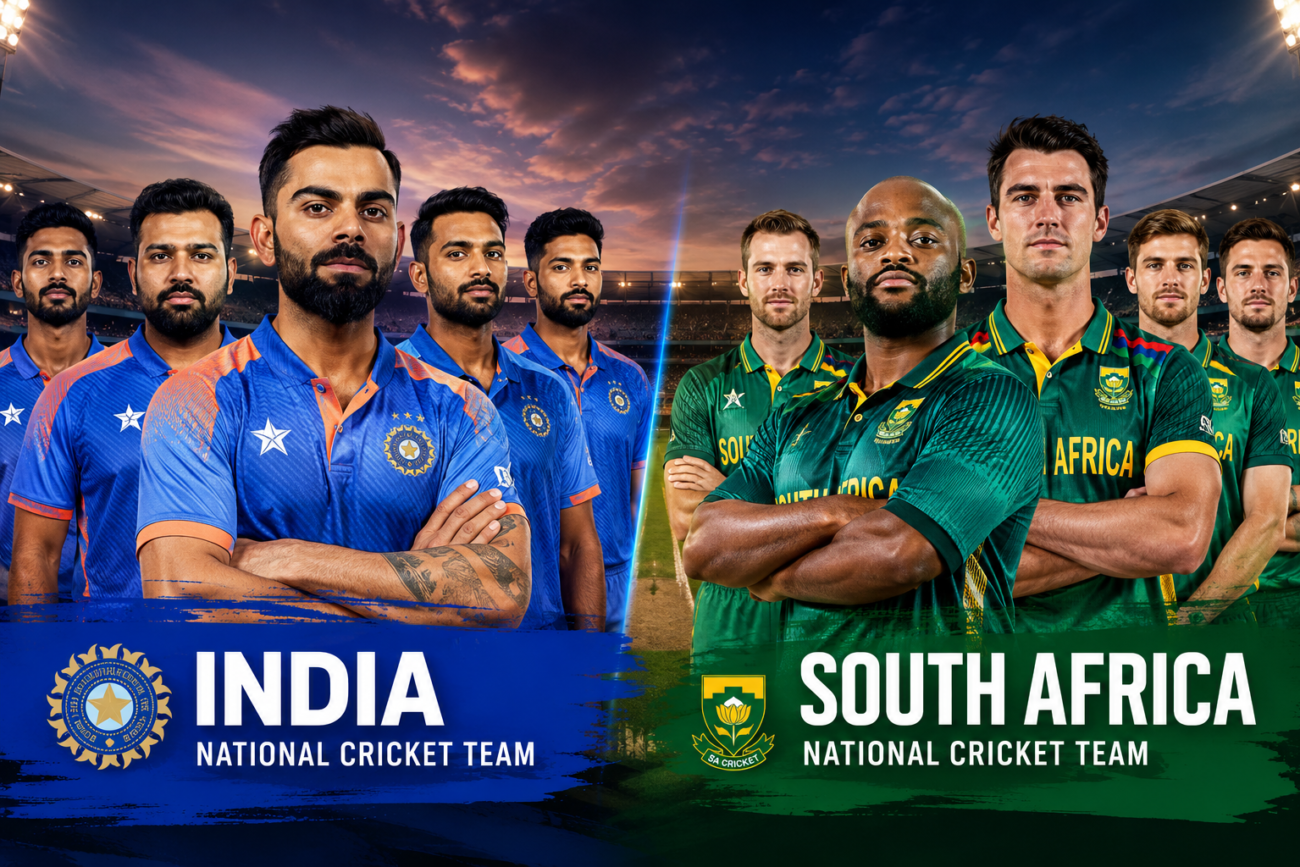
The cricket rivalry between the two sides has grown into one of the most competitive contests in international cricket. From their early meetings after the return of one team to global cricket, every match has carried intensity, pressure, and high skill levels. Over the years, the encounters have produced thrilling scorecards, unforgettable performances, and moments that shifted momentum in an instant. Fans from both nations have witnessed dramatic chases, disciplined bowling spells, and tactical battles across all formats. This rivalry is not just about wins and losses, but about pride, resilience, and the constant search for dominance in world cricket.
Recent Matches Table
| Date | Format | Venue | Batting First | Score | Chasing Team | Result |
|---|---|---|---|---|---|---|
| 22 Feb 2026 | T20I | Ahmedabad | South Africa | 187/7 | India | South Africa won by 76 runs |
| 04 Feb 2026 | T20I | Navi Mumbai | India | 165/5 | South Africa | India won by 30 runs |
| 19 Dec 2025 | T20I | Ahmedabad | India | 192/4 | South Africa | India won by 30 runs |
| 14 Dec 2025 | T20I | Dharamshala | South Africa | 148/9 | India | India won by 7 wickets |
| 11 Dec 2025 | T20I | New Chandigarh | South Africa | 212/5 | India | South Africa won by 51 runs |
| 09 Dec 2025 | T20I | Cuttack | India | 224/3 | South Africa | India won by 101 runs |
| 06 Dec 2025 | ODI | Visakhapatnam | South Africa | 118/10 | India | India won by 9 wickets |
Team Statistics Summary Table
| Format | Total Matches | India Won | South Africa Won | No Result | India Home Wins | South Africa Home Wins |
|---|---|---|---|---|---|---|
| Test Matches | 44 | 16 | 18 | 10 | 11 | 13 |
| One Day matches | 94 | 40 | 51 | 3 | 20 | 26 |
| Twenty20 matches | 36 | 21 | 14 | 1 | 8 | 8 |
| T20 World Cup | 8 | 5 | 3 | 0 | 0 | 0 |
| ODI World Cup | 6 | 3 | 3 | 0 | 1 | 0 |
| ICC Tournaments | 17 | 10 | 7 | 0 | 2 | 0 |
| Overall Combined | 197 | 90 | 93 | 14 | 41 | 42 |
Individual Batting Records Table
| Player Name | Team Country | Matches Played | Total Innings | Runs Scored | Highest Score | Batting Average |
|---|---|---|---|---|---|---|
| David Miller | South Africa | 23 | 21 | 543 | 106 | 45.25 |
| Suryakumar Yadav | India | 17 | 16 | 482 | 111 | 37.07 |
| Quinton de Kock | South Africa | 19 | 19 | 412 | 92 | 24.23 |
| Hardik Pandya | India | 16 | 13 | 314 | 71 | 31.40 |
| Aiden Markram | South Africa | 15 | 14 | 298 | 70 | 22.92 |
| Tristan Stubbs | South Africa | 11 | 10 | 245 | 45 | 30.62 |
| Shivam Dube | India | 8 | 7 | 189 | 42 | 27.00 |
Individual Bowling Records Table
| Bowler Name | Team Country | Matches Bowled | Overs Delivered | Wickets Taken | Economy Rate | Best Bowling |
|---|---|---|---|---|---|---|
| Arshdeep Singh | India | 15 | 56.0 | 23 | 8.12 | 4/25 |
| Kagiso Rabada | South Africa | 18 | 68.4 | 19 | 8.45 | 3/20 |
| Keshav Maharaj | South Africa | 14 | 52.0 | 15 | 7.38 | 3/24 |
| Jasprit Bumrah | India | 11 | 42.0 | 14 | 6.85 | 3/16 |
| Axar Patel | India | 13 | 44.0 | 12 | 7.52 | 3/17 |
| Lungi Ngidi | South Africa | 11 | 39.2 | 11 | 8.91 | 3/29 |
| Hardik Pandya | India | 14 | 38.0 | 10 | 8.21 | 3/28 |
Early Encounters After International Return
The beginning of this cricket rivalry can be traced back to the early 1990s when a newly returned international side stepped back into global competition. The matches immediately carried curiosity because one team was rebuilding its identity while the other was already shaping a strong presence in world cricket. Early games were dominated by disciplined fast bowling and technically solid batting displays. The contests were not one-sided, which made them even more engaging for fans across different countries. Every meeting between these sides brought fresh questions about adaptability, temperament, and skill under pressure. Indian conditions tested pace attacks, while overseas venues exposed technical gaps in batting approaches. These early encounters laid the foundation of a competitive relationship that slowly gained respect. Both teams learned from each other’s strengths, and every match added a new layer of tactical awareness and emotional intensity among supporters.
| Year | Format | Venue Type | Result Type | Key Feature |
| 1991 | ODI | Subcontinent | Close finish | Spin dominance |
| 1992 | ODI | Overseas | Competitive | Pace challenge |
| 1992 | Test | Neutral | Draw | Defensive batting |
| 1993 | ODI | Subcontinent | Tight win | Middle order effort |
| 1993 | Test | Overseas | Narrow result | Bowling impact |
Growing Competitive Balance in the Mid Era
As the rivalry progressed into the mid phase of the decade, matches became more structured and competitive. Both sides had developed clearer game plans, with one focusing heavily on pace aggression and the other relying on technical batting depth and spin control. The contests often went deep into the final overs or final sessions, making results unpredictable. Batters started adjusting their techniques to handle high-quality fast bowling, while bowlers worked on variations to break settled partnerships. The mental aspect of the game became just as important as skill. Players understood that small mistakes could shift momentum instantly. Stadium environments grew louder and more intense as fans began to recognize the rising importance of these encounters. Each match became a test of patience and execution rather than just raw talent, creating a strong sense of rivalry respect between the teams.
| Season | Matches Played | Competitive Level | Dominant Skill | Outcome Pattern |
| Mid 90s | 3 | High | Fast bowling | Mixed results |
| Mid 90s | 4 | Very High | Batting control | Close finishes |
| Mid 90s | 2 | Balanced | Spin variation | Split outcomes |
| Mid 90s | 3 | High pressure | Fielding quality | Narrow margins |
| Mid 90s | 2 | Tactical | Death overs | Unpredictable |
Tactical Evolution in Longer Format Battles
Over time, longer format matches between these two sides became a showcase of tactical depth. Captains focused heavily on field placements, pitch reading, and session control rather than just individual performances. Fast bowlers used reverse swing and consistent line lengths to build pressure, while batters emphasized patience and shot selection. Spin bowling also played a crucial role, especially in subcontinental conditions where the ball tended to turn sharply in later stages of the match. Partnerships became the backbone of scoring strategies, with teams prioritizing stability over quick runs. The ebb and flow of sessions often decided the outcome rather than isolated moments. Coaches and analysts began influencing strategies more directly, introducing structured game plans. These matches became less about explosive bursts and more about endurance, discipline, and mental resilience over five days of play.
| Aspect | Home Advantage | Away Challenge | Key Factor | Impact Level |
| Batting | Strong | Difficult | Pitch behavior | High |
| Bowling | Spin friendly | Seam friendly | Conditions | High |
| Fielding | Supportive crowd | Pressure crowd | Mental strength | Medium |
| Strategy | Balanced | Defensive | Adaptation | High |
| Sessions | Controlled | Unstable | Consistency | High |
Pressure Driven ICC Tournament Clashes
When these teams met in global tournaments, the intensity naturally increased. Every match carried qualification pressure, making execution more critical than strategy alone. Batting collapses and sudden momentum shifts became common under knockout conditions. One side often relied on experienced anchors to stabilize innings, while the other focused on aggressive starts to gain early advantage. Bowling units were tested under extreme pressure situations where even a single over could define the match outcome. Fielding standards also rose significantly, as saving runs became just as important as scoring them. Fans from both sides created electrifying atmospheres, adding emotional weight to every delivery. These matches often produced unforgettable finishes, including last over thrillers and narrow run chases. The psychological battle became as significant as the physical one, with players constantly adapting to shifting match scenarios under immense global spotlight.
| Tournament | Stage | Pressure Level | Decisive Factor | Result Style |
| World Event | Group | High | Batting depth | Close finish |
| World Event | Knockout | Very High | Bowling death overs | Narrow win |
| Global Cup | Group | High | Opening partnership | Dominant |
| Global Cup | Knockout | Extreme | Fielding errors | Tight result |
| World Event | Semi-final | Extreme | Middle overs control | Decided late |
Modern Era Batting Power and High Scoring Games
In the modern phase, the rivalry transformed into a high scoring spectacle driven by aggressive batting styles. Strike rates increased significantly as players began focusing on boundary hitting and quick acceleration. Powerplay overs became crucial, often deciding the momentum of the entire match. Batters started targeting specific bowlers, while bowlers responded with variations like slower deliveries and yorkers. The introduction of T20 influence in ODI and Test approaches changed overall match dynamics. Partnerships built at high speed replaced traditional slow accumulation strategies. Even in longer formats, scoring rates improved dramatically. Matches often crossed high totals, making chasing teams more confident. However, this also increased pressure on bowling attacks, especially in death overs. Tactical innovations such as matchups and data analysis began playing a key role in decision-making, adding a new analytical dimension to the rivalry.
| Era | Average Score | Strike Rate Trend | Bowling Response | Match Nature |
| Early Modern | 250+ | Moderate | Standard pace | Balanced |
| Mid Modern | 280+ | High | Variations used | Aggressive |
| Recent | 300+ | Very High | Data driven | High scoring |
| T20 Influence | 180+ | Extreme | Yorkers/slower | Explosive |
| Mixed Format | Variable | Adaptive | Tactical plans | Unpredictable |
Individual Battles Between Star Performers
One of the most fascinating aspects of this rivalry has been the individual battles between world-class performers. Top batters have often found themselves challenged by elite fast bowlers capable of generating pace, bounce, and movement. These duels have produced moments of brilliance, where a single delivery or a single shot changed the direction of an entire match. Bowlers studied batting patterns closely, while batters prepared for specific spells. These micro battles within the larger game created emotional intensity and psychological pressure. Some encounters saw batters dominating early, only for bowlers to strike back with crucial breakthroughs. Over time, mutual respect developed among players who repeatedly faced each other in high-pressure situations. These contests became defining features of the rivalry, remembered not just for statistics but for the drama they produced on the field.
| Player Type | Strength | Challenge Faced | Key Moment | Impact |
| Top Batter | Stroke play | Short ball | Early wickets | High |
| Fast Bowler | Pace attack | Defensive technique | Breakthrough overs | High |
| All-rounder | Balance | Pressure handling | Match turning spell | Very High |
| Spinner | Control | Aggression batting | Middle overs control | Medium |
| Wicketkeeper | Strategy | Fast pace | Quick decisions | Medium |
Emotional Fan Engagement and Stadium Atmosphere
Beyond the technical side of cricket, fan engagement has always played a massive role in shaping the atmosphere of these encounters. Stadiums often turn into high-energy arenas where every run and wicket is celebrated passionately. Supporters bring emotional intensity that influences the rhythm of the game. Players often acknowledge that crowd energy impacts focus and decision-making. Social media discussions during modern matches amplify reactions instantly, making every moment widely discussed. Rival fans debate performances, strategies, and turning points long after the match ends. This emotional involvement has helped the rivalry grow beyond just sport, becoming a cultural talking point. Even neutral fans often get drawn into the excitement due to unpredictable match outcomes. The combination of skill and emotion makes these encounters memorable and deeply engaging for global audiences.
| Factor | Home Crowd | Away Crowd | Impact Level | Match Influence |
| Noise Level | High | Moderate | High | Focus shift |
| Support | Strong | Limited | Medium | Motivation |
| Pressure | Opponent | Home team | High | Performance change |
| Energy | Positive | Challenging | High | Momentum |
| Reaction | Instant | Delayed | Medium | Emotional swing |
Recent Phase and Balanced Competition Era
In the most recent phase, the rivalry has become more balanced than ever. Both sides now possess deep squads with strong bench strength and tactical awareness. Matches are often decided by small margins such as a single over, dropped catch, or late partnership. Data analytics, video analysis, and match simulations play a crucial role in planning strategies. Players are more adaptable across formats, making contests unpredictable. Fitness standards have also improved significantly, allowing high intensity performance throughout long series. Young players have started making immediate impacts, adding freshness to the rivalry. Despite changing generations, the competitive spirit remains unchanged. Each match continues to deliver drama, skill, and unpredictability, keeping fans deeply invested in every encounter.
| Phase | Team Balance | Key Advantage | Match Style | Outcome Trend |
| Early | Uneven | Experience | Defensive | Mixed |
| Mid | Balanced | Strategy | Tactical | Close |
| Modern | Strong both sides | Depth | Aggressive | High scoring |
| Recent | Equal | Adaptability | Unpredictable | Tight finishes |
| Current | Elite | All-round strength | Dynamic | Balanced |
Conclusion
This rivalry has evolved through decades of cricketing history, shaped by changing generations, strategies, and playing conditions. What started as early competitive meetings has transformed into a balanced contest filled with high pressure moments and world class performances. Each match has added a new chapter, whether through close finishes, record breaking innings, or dominant bowling spells. Both teams have pushed each other to improve and adapt continuously. Today, this rivalry stands as a symbol of modern cricket intensity where no match is predictable and every scorecard tells a story of effort, emotion, and elite sporting excellence.
FAQs
1. Why is this rivalry considered so competitive?
Because both teams have strong batting and bowling units, making matches unpredictable and closely contested across all formats.
2. Which format has produced the most exciting matches?
ODI and T20 formats have produced the most thrilling encounters due to close finishes and high scoring games.
3. What makes the bowling battles special?
High quality fast bowling and spin variations create constant pressure, leading to frequent wicket-taking moments.
4. How important are ICC tournament matches in this rivalry?
They are very important because they carry knockout pressure, making performances more intense and impactful.
5. Has this rivalry changed in modern cricket?
Yes, modern cricket has made it more balanced with higher scoring rates, advanced tactics, and stronger squad depth.