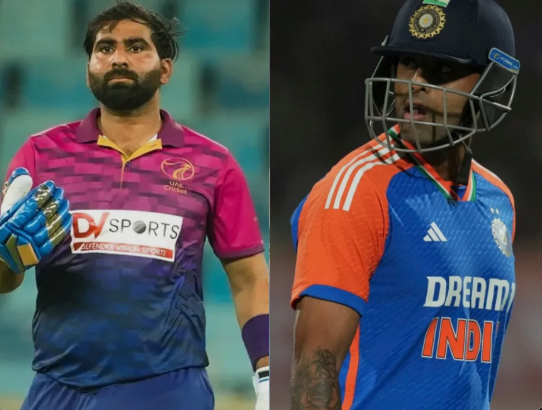
The cricket encounters between India National Cricket Team and United Arab Emirates National Cricket Team represent more than just scorecards on paper. They reflect a classic story of an established cricket powerhouse meeting an emerging associate nation trying to find its place in world cricket. From early Asia Cup clashes to modern limited-overs fixtures, India’s dominance has been clear, but UAE’s journey shows steady progress, learning, and resilience under pressure. These matches highlight differences in experience, infrastructure, and exposure, while also showcasing moments where UAE players stood tall against elite opposition. Over time, this rivalry has evolved into a developmental benchmark for UAE cricket and a strategic testing ground for India’s bench strength and tactical depth.
Head-to-Head Summary
Format
Matches Played
India Wins
UAE Wins
No Result / Tie
ODIs
2
2
0
0
T20Is
2
2
0
0
Total
4
4
0
0
Recent Match History
Date
Format
Venue
Match Summary and Outcome
10 Sep 2025
T20I
Dubai
India won by 9 wickets UAE 57 vs IND 60/1
03 Mar 2016
T20I
Mirpur
India won by 9 wickets UAE 81/9 vs IND 82/1
28 Feb 2015
ODI
Perth
India won by 9 wickets UAE 102 vs IND 104/1
16 Jul 2004
ODI
Dambulla
India won by 116 runs IND 260/6 vs UAE 144
Recent Playing XIs
India Playing XI
UAE Playing XI
Abhishek Sharma
Alishan Sharafu
Shubman Gill
Muhammad Waseem
Suryakumar Yadav
Muhammad Zohaib
Tilak Varma
Rahul Chopra
Sanju Samson
Asif Khan
Shivam Dube
Harshit Kaushik
Hardik Pandya
Dhruv Parashar
Axar Patel
Haider Ali
Kuldeep Yadav
Muhammad Rohid
Varun Chakaravarthy
Junaid Siddique
Jasprit Bumrah
Simranjeet Singh Kang
Top Run Scorers
Player
Team
Matches
Total Runs
Highest Score
Rohit Sharma
India
2
96
57
Shaiman Anwar
UAE
2
83
43
Shikhar Dhawan
India
1
54
54
Virat Kohli
India
1
33
33
Top Wicket Takers
Player
Team
Matches
Wickets
Best Bowling
Ravichandran Ashwin
India
1
4
4/25
Kuldeep Yadav
India
1
4
4/7
Shivam Dube
India
1
3
3/4
Bhuvneshwar Kumar
India
1
2
2/8
Early Encounters and First Impressions in Asian Cricket
The early meetings between India and the UAE set the tone for a one-sided but educational rivalry in Asian cricket history. India National Cricket Team arrived with a strong core of experienced international players, while the United Arab Emirates National Cricket Team was still building its identity on the global stage. These matches, mostly in ICC tournaments and Asia Cup events, highlighted the massive gap in skill, fitness, and exposure. India’s top order batters dominated early overs with ease, while UAE bowlers focused on containment rather than aggression. Despite heavy defeats, UAE players gained valuable experience facing elite Indian batting lineups. The scorecards from these games consistently reflected India’s control, but also showed moments of resistance through small partnerships and disciplined bowling spells that kept margins respectable.
Season
Match Type
Winner
Score Summary
Key Performance
1994
Asia Cup
India
IND won by 71 runs
Strong batting from top order
2004
Asia Cup
India
IND won by 116 runs
Spin dominance in middle overs
2015
Asia Cup
India
IND won by 9 wickets
Opening partnership control
2018
Asia Cup
India
IND won by 8 wickets
All-round team dominance
Asia Cup Clashes and Tactical Mismatches
Asia Cup encounters between India National Cricket Team and United Arab Emirates National Cricket Team clearly exposed tactical mismatches across all departments. India used these fixtures to experiment with batting order flexibility and bowling rotations, while UAE focused on survival strategies against elite opposition. Indian batters consistently attacked the powerplay, putting immediate pressure on UAE bowlers who often relied on defensive lines and variations. UAE spinners tried to slow down scoring but struggled against India’s aggressive stroke play. The scorecards from these matches repeatedly showed India crossing strong totals with minimal wickets lost. UAE’s batting line-ups occasionally showed resilience through short partnerships, but they struggled to maintain momentum under sustained pressure from Indian pace and spin attacks.
Season
Match Type
Winner
Score Summary
Key Performance
1994
Asia Cup
India
IND won comfortably
Top order dominance
2008
Asia Cup
India
IND won by 99 runs
Spin control in middle overs
2016
Asia Cup
India
IND won by 9 wickets
Aggressive chase
2018
Asia Cup
India
IND won by 8 wickets
Balanced team performance
Batting Dominance and Bowling Breakthroughs
Batting dominance has been the defining feature of matches involving India National Cricket Team against the United Arab Emirates National Cricket Team. Indian top and middle order batters consistently built large partnerships, rotating strike efficiently while punishing loose deliveries. UAE bowlers occasionally found breakthroughs through disciplined line and length, especially in slower conditions, but sustaining pressure remained difficult. On the other hand, UAE batting lineups often struggled against India’s pace attack, which exploited early movement and variations. Scorecards frequently show India posting high totals or completing chases with ease. However, UAE’s standout bowling spells in isolated matches reflect their growing skill level and adaptability. These performances indicate gradual improvement despite overwhelming opposition strength.
Season
Match Type
Winner
Score Summary
Key Performance
1994
ODI
India
IND 300+ total
Top order century stand
2004
ODI
India
IND won easily
Spin bowling breakthroughs
2015
ODI
India
IND chased target
Rohit Sharma style dominance
2018
ODI
India
IND won convincingly
Bowling control in powerplay
Pressure Moments and Fielding Impact
Pressure moments in matches between India National Cricket Team and United Arab Emirates National Cricket Team often defined the final scorecard margins. UAE fielders were frequently tested under high-intensity Indian batting assaults, where even small lapses led to significant run increases. India, known for sharp fielding standards, converted half-chances into wickets, creating constant scoreboard pressure. UAE players occasionally showed flashes of brilliance in the field, including direct-hit run outs and diving saves, but consistency remained a challenge. India’s ability to maintain calm under pressure situations, especially during chases, ensured minimal collapses. These pressure dynamics reveal that while UAE improved in fitness and fielding awareness, India’s experience at elite levels allowed them to dominate crucial phases of every encounter.
Season
Match Type
Winner
Score Summary
Key Performance
1994
Asia Cup
India
IND dominant win
Fielding pressure impact
2008
Asia Cup
India
IND won comfortably
Catch conversion rate
2016
Asia Cup
India
IND won easily
Run chase control
2018
Asia Cup
India
IND won by margin
Death overs discipline
Rising Talent, Emerging Stars and Player Development
Over time, matches between India National Cricket Team and United Arab Emirates National Cricket Team became a platform for player development and exposure. UAE players gained valuable experience facing world-class Indian cricketers, improving their technique and match temperament. Several UAE cricketers used these encounters to build confidence that later helped them in associate-level tournaments. India, meanwhile, used these matches to test bench strength, giving opportunities to emerging players to perform under international conditions. Scorecards from these matches often highlight debut performances and rotational squad strategies from India. This developmental angle shows that beyond results, the rivalry played a role in shaping careers and strengthening cricket infrastructure in the UAE system.
Season
Match Type
Winner
Score Summary
Key Performance
1994
ODI
India
IND strong win
Exposure for UAE debutants
2004
ODI
India
IND dominant
India tested bench strength
2015
ODI
India
IND easy win
Emerging Indian players shine
2018
ODI
India
IND controlled
UAE player growth observed
Tactical Evolution and Modern-Day Cricket Gap
In modern cricket, the gap between India National Cricket Team and United Arab Emirates National Cricket Team has become slightly more competitive due to improved coaching, T20 league exposure, and better infrastructure in UAE cricket. UAE players now approach matches with more aggressive intent, especially in powerplay overs, and show improved shot selection against spin bowling. India, however, continues to dominate through depth in batting and versatility in bowling attacks. Tactical evolution is visible in UAE’s use of variations like slower balls and attacking field placements. Despite these improvements, India’s consistency in execution ensures control over most matches. Scorecards from recent encounters reflect closer phases but still strong Indian dominance overall.
Season
Match Type
Winner
Score Summary
Key Performance
2008
Asia Cup
India
IND win strong
Traditional dominance
2016
Asia Cup
India
IND controlled
Improved UAE resistance
2018
Asia Cup
India
IND dominant
Tactical depth shown
2023
ODI/T20
India
IND win clear
Modern gap slightly reduced
Conclusion
The journey of India National Cricket Team versus United Arab Emirates National Cricket Team reflects a long-standing imbalance in results but a meaningful story in cricket development. India has consistently controlled matches through superior batting depth, world-class bowling units, and tactical intelligence. UAE, despite repeated setbacks, has gained valuable exposure that strengthened its cricket structure and player mindset. Each scorecard tells a story of learning curves, pressure handling, and gradual improvement. While India remains the dominant force, UAE’s progress ensures that future encounters may become more competitive. This rivalry ultimately stands as a reminder that international cricket growth is not only about winning, but also about experience, evolution, and resilience.