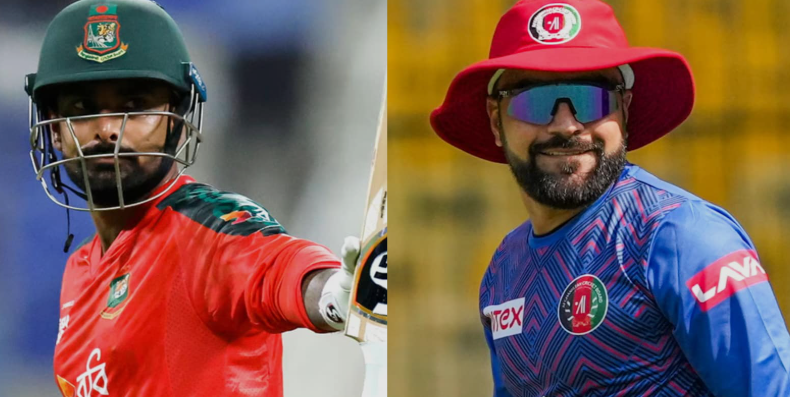
The competitive timeline between these two cricketing sides reflects a journey of rapid growth, tactical evolution, and rising intensity. What began as occasional encounters between an established team and an emerging force has now developed into a closely followed rivalry in international cricket. Each match has added new layers of pressure, unpredictability, and strategic depth, with both teams improving significantly over time. From spin-dominated battles to high-pressure finishes, their meetings have produced memorable performances and shifting momentum. Fans from both nations now expect closely fought contests, where individual brilliance and smart tactics often decide the outcome in crucial moments.
Recent Matches Table
Date
Format
Venue
Winner
Margin
Bangladesh Score
Afghanistan Score
11 Nov 2024
ODI
Sharjah
Afghanistan
5 wickets
244/8
246/5
09 Nov 2024
ODI
Sharjah
Bangladesh
68 runs
252/7
184
06 Nov 2024
ODI
Sharjah
Afghanistan
92 runs
143
235
24 Jun 2024
T20I
St Vincent
Afghanistan
8 runs
105/8
115/5
07 Oct 2023
ODI
Dharamshala
Bangladesh
6 wickets
158/4
156
16 Jul 2023
T20I
Sylhet
Bangladesh
6 wickets
119/4
116/7
Team Statistics Summary Table
Metric
Tests
ODIs
T20Is
Total Matches
Bangladesh Wins
Afghanistan Wins
Matches Played
2
19
12
33
15
18
Bangladesh Won
1
11
3
15
15
0
Afghanistan Won
1
8
9
18
0
18
Tied Matches
0
0
0
0
0
0
No Result Matches
0
0
0
0
0
0
Highest Team Total
546
334
167
546
546
334
Lowest Team Total
103
143
72
72
103
72
Individual Batting Records Table
Player Name
Matches
Innings
Total Runs
Highest Score
Batting Average
Strike Rate
Mushfiqur Rahim (BAN)
29
28
694
86
28.91
75.10
Rahmanullah Gurbaz (AFG)
16
16
592
145
37.00
85.17
Shakib Al Hasan (BAN)
26
25
586
63
26.63
82.30
Mahmudullah (BAN)
30
28
581
98
29.05
78.72
Mohammad Nabi (AFG)
32
29
563
84
23.45
93.36
Ibrahim Zadran (AFG)
14
14
495
100
38.07
74.54
Individual Bowling Records Table
Player Name
Matches
Innings
Wickets Taken
Best Bowling
Economy Rate
Bowling Average
Rashid Khan (AFG)
24
24
45
6 for 43
3.91
16.12
Shakib Al Hasan (BAN)
26
26
38
5 for 29
4.22
22.44
Fazalhaq Farooqi (AFG)
15
15
27
4 for 54
4.96
23.11
Mujeeb Ur Rahman (AFG)
17
17
25
3 for 54
4.41
27.20
Taskin Ahmed (BAN)
16
16
24
4 for 33
4.92
22.58
Mohammad Nabi (AFG)
32
31
24
3 for 16
4.38
32.79
Early Encounters and First Competitive Sparks
The beginning phase of international meetings between the two emerging cricket sides was marked by curiosity, pressure, and rapid learning. One team entered the contest with more exposure at higher levels, while the other carried raw aggression and fearless intent shaped by years of associate cricket battles. These early matches were not dominated by one pattern but instead fluctuated between low scoring games and sudden batting collapses. Spin bowling quickly became the deciding factor, as both teams relied heavily on turning tracks to gain control. Fielding standards and pressure handling often separated the winner from the losing side. Fans began noticing that these encounters rarely ended in one-sided results, even when the scorecards suggested a clear margin. Each game added emotional weight, gradually turning simple fixtures into a developing rivalry. Players started adapting strategies based on previous meetings, and captains focused more on tactical matchups rather than pure form or rankings.
Match Type
Venue Condition
Top Performer
Result Nature
Key Factor
ODI
Slow pitch
Spinner A
Close finish
Middle overs control
T20
Balanced
Batter B
Narrow win
Death overs execution
ODI
Turning track
All-rounder C
Low scoring
Spin dominance
T20
Flat pitch
Batter D
High chase
Power hitting
Rise of Competitive Balance
As encounters continued, the gap between experience and ambition began to shrink significantly. The younger cricketing side improved rapidly through exposure to global tournaments and franchise leagues, which helped their players gain confidence against higher-ranked opponents. Meanwhile, the more established side focused on maintaining consistency through structured batting orders and spin-heavy bowling attacks. Matches became increasingly unpredictable, with momentum shifting multiple times within a single game. Batters learned to handle pressure situations better, especially during chases where required run rates often fluctuated sharply. Bowlers adapted by mixing pace and variations instead of relying only on traditional spin. This phase also saw the emergence of key match-winners who could change the outcome within a few overs. Stadium atmospheres grew more intense, especially in neutral venues where crowd support was divided. Every contest now carried the feeling of a mini-final rather than a routine bilateral game.
Season
Improvement Area
Impact Player
Strategy Shift
Match Outcome Trend
Early phase
Batting depth
Player X
Defensive approach
One-sided
Mid phase
Bowling variation
Player Y
Mixed attack
Balanced
Growth phase
Fielding upgrade
Player Z
Aggressive fielding
Tight finishes
Modern phase
Power hitting
Player W
High strike rate
Unpredictable
Tactical Spin Battles Development
Spin bowling gradually became the heart of contests between the two sides. Both teams possessed high-quality spinners capable of exploiting subcontinent conditions, which turned matches into strategic chess games. Captains often built entire game plans around controlling the middle overs rather than focusing only on powerplay or death overs. Batters had to adjust their footwork, strike rotation, and shot selection depending on pitch behavior. In several matches, even chasing moderate totals became difficult due to sudden turn and variable bounce. The introduction of mystery spin and quicker arm balls added another layer of complexity. Coaches emphasized reading pitch conditions early and building partnerships instead of aggressive solo performances. This phase also highlighted the importance of wicket-to-wicket bowling, which restricted scoring opportunities. Fans often witnessed matches where scoring rates dropped significantly between overs 10 to 15, creating high-pressure finishes. These tactical battles made every encounter feel like a test of patience and skill rather than just power hitting.
Bowling Type
Effectiveness
Key Strength
Weakness Exploited
Match Influence
Off-spin
High
Control
Predictability
Middle overs
Leg-spin
Very high
Wicket-taking
Risk factor
Momentum shift
Pace variation
Medium
Surprise element
Consistency
Death overs
Mystery spin
High
Confusion
Experience gap
Collapse trigger
Batting Performances and Match Winners
Over time, batting performances became more decisive in shaping outcomes. Both sides developed dependable top-order batters capable of anchoring innings while also accelerating when required. In several matches, early wickets placed pressure on middle-order players, forcing them to rebuild carefully before launching late attacks. Partnerships played a critical role, especially during challenging chases where scoring opportunities were limited. Some batters stood out for their ability to rotate strike efficiently against spin, while others dominated pace bowling with aggressive stroke play. The unpredictability of pitch conditions meant that adaptability became more important than raw power. Individual centuries and half-centuries often defined match results, especially in closely contested games. Pressure situations revealed character, as some players thrived while others struggled to maintain composure. Field placements and bowling changes further tested batting discipline. This phase of rivalry is remembered for standout innings that turned matches from losing positions into memorable victories.
Batter Role
Average Score Impact
Strike Rate Range
Pressure Handling
Match Contribution
Opener
High
70–110
Medium
Foundation
Middle order
Very high
80–130
High
Recovery
Finisher
High
120–180
Very high
Match-winning
Anchor
Consistent
60–85
High
Stability
Bowling Pressure and Game Turning Spells
Bowling units from both sides played a decisive role in shaping match outcomes, especially during critical phases of the game. Powerplay overs often set the tone, with early breakthroughs creating pressure on batting sides. In many matches, disciplined line and length bowling restricted scoring opportunities, forcing batters into risky shots. Death overs became equally important, where execution under pressure determined final results. Bowlers who could maintain accuracy while varying pace became highly valuable assets. Several games witnessed dramatic collapses triggered by short spells of intense bowling pressure. Captains relied heavily on tactical field placements to support their bowlers, especially when defending moderate totals. In some encounters, a single over completely shifted momentum, changing the expected result. This phase highlighted the importance of mental strength and execution under pressure. Bowlers who consistently delivered in crunch situations became match-defining figures in this evolving cricket rivalry.
Bowling Phase
Economy Impact
Key Skill
Pressure Level
Match Effect
Powerplay
Medium
Swing control
High
Early wickets
Middle overs
Low
Spin accuracy
Very high
Run restriction
Death overs
High risk
Yorkers
Extreme
Match outcome
Super overs
Variable
Composure
Maximum
Final result
High Pressure Tournament Encounters
When the two sides met in global tournaments, the intensity reached another level. Qualification stakes and knockout scenarios made every ball significant, increasing pressure on both teams. Players had to adapt quickly to unfamiliar conditions, which tested their preparation and mental strength. Batting collapses and surprise comebacks became common themes in these matches. In some games, underdogs surprised stronger opponents with disciplined bowling and fearless batting. Tactical decisions, such as bowling changes and batting order adjustments, played a crucial role in determining outcomes. Fielding errors often proved costly in tight matches, highlighting the importance of concentration. Crowd energy added another layer of pressure, especially in stadiums with neutral yet emotionally charged audiences. These encounters significantly contributed to shaping the overall rivalry narrative, as tournament performances often carried more weight than bilateral series results.
Tournament Stage
Pressure Level
Key Factor
Winning Strategy
Common Outcome
Group stage
Medium
Net run rate
Balanced play
Competitive
Knockout
High
Execution
Risk control
Close finishes
Qualification
Very high
Consistency
Conservative approach
Low scoring
Final stages
Extreme
Mental strength
Aggression timing
Unpredictable
Modern Era Evolution of Competition
In recent years, the rivalry has evolved into a more balanced and strategically refined contest. Both sides now possess stronger bench strength, improved fitness levels, and better data-driven planning. Modern cricket analytics have influenced match preparation, with teams studying opposition patterns in detail. Batters are more aggressive in the powerplay, while bowlers rely on advanced variations and match-ups. Fielding standards have also improved significantly, reducing the number of extra runs and missed opportunities. The competition no longer depends on a single department but instead on complete team performance. Matches are often decided in the final overs, reflecting the narrow gap between both sides. This modern phase represents maturity in the rivalry, where experience and innovation blend together. Fans now expect high-quality, closely contested matches every time these teams meet, making it one of the more intriguing contests in contemporary international cricket.
Modern Factor
Improvement Level
Impact Area
Key Advantage
Result Influence
Analytics
High
Strategy
Better planning
Consistency
Fitness
Very high
Fielding
Fewer errors
Tight games
Power hitting
High
Batting
Faster scoring
Chase success
Bowling variations
High
Attack
Wicket creation
Momentum shift
Conclusion
The overall timeline of this rivalry highlights how both teams have evolved into competitive and well-balanced sides. Early dominance has gradually transformed into evenly matched contests where small moments decide results. Players from both sides have delivered match-winning performances under pressure, while tactical improvements have raised the quality of every encounter. This ongoing cricketing relationship continues to grow in intensity, offering thrilling finishes and memorable highlights. As both teams strengthen their squads and refine strategies, future clashes promise even greater excitement, making this rivalry an important and engaging part of modern international cricket.